
That dull ache that shows up every time you drink coffee. The sharp zing when cold air hits your mouth on a morning walk through Midtown. These aren’t random. Your tooth is sending a message.
Most people we see waited weeks before calling. Sometimes months. They figured the pain would go away on its own. And, sometimes it does fade for a bit. But fading doesn’t mean fixed. It usually means the nerve is dying, the pain just quiets down before things get worse.
Here’s what to watch for:
We see this every week. Someone comes in thinking they just need a filling, turns out the infection has already reached the pulp inside the tooth. That’s the soft tissue where the nerve and blood vessels live. Once bacteria get in there, a filling won’t cut it.
Not sure if what you’re feeling is serious enough to worry about? That’s actually pretty common. People second-guess tooth pain all the time. One thing that helps is the “tap test.” Gently tap the tooth with a fingernail. If it sends a jolt through your jaw, something’s going on below the surface.
Our patients tend to be proactive about health. But teeth are the one area where people talk themselves out of getting help. They’ll ice it, switch to chewing on the other side, pop ibuprofen before bed. Nine times out of ten it’s the same story when they finally come in: “I should’ve called sooner.”
You don’t need to diagnose yourself. That’s our job. But if any of those signs sound familiar, don’t wait for the pain to decide your timeline.
We get asked this all the time. “Should I just pull it?”
Look, pulling a tooth feels like the quick fix. But your natural tooth is almost always worth saving. Root canal therapy lets you keep what’s already there, and nothing we can place in your mouth works quite as well as the real thing. Not an implant, not a bridge. Your own tooth has a root system that talks to your jawbone, keeps it strong, keeps neighboring teeth from shifting.
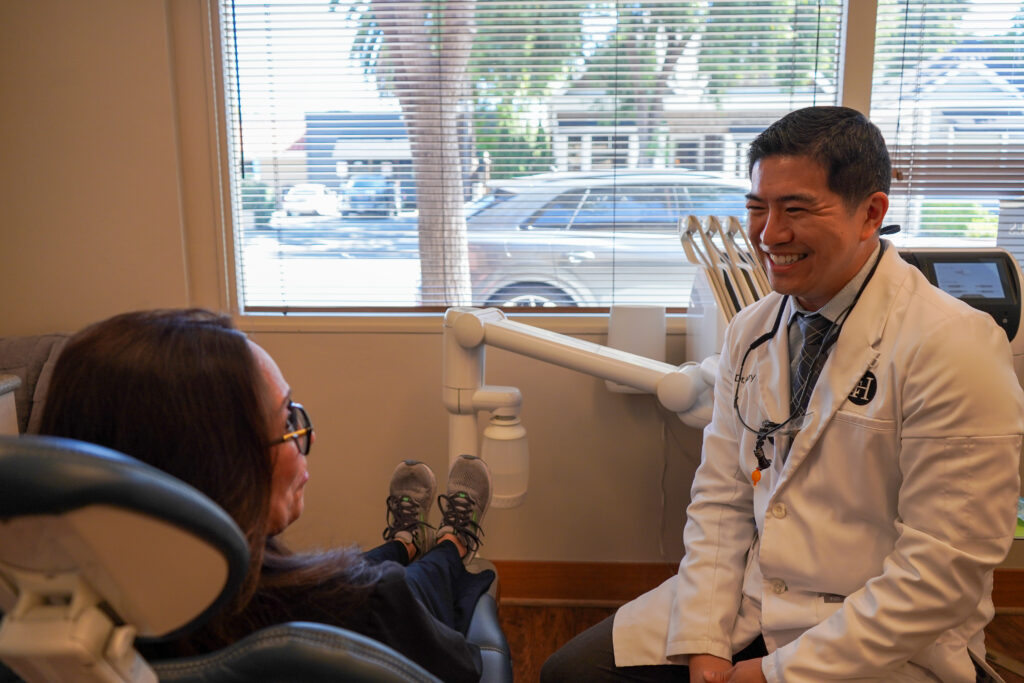
Once a tooth comes out, things start to change fast. The bone underneath begins to shrink. The teeth on either side can drift into the gap. Your bite shifts. Chewing gets harder on one side, you might not even notice it happening for months. Then suddenly you’re dealing with jaw pain or uneven wear on teeth that were perfectly fine before.
What You Keep When You Save the Tooth
According to the American Association of Endodontists, root canal therapy has a success rate above 95 percent. That’s a number we see play out every week right here in Palo Alto. Patients who save the tooth now avoid a much longer process later.
And here’s what people don’t think about. An extraction means you’ll eventually need something to fill that space. That could mean a dental implant or a dental bridge, both of which take more time and more visits. Root canal therapy handles the problem in the tooth you already have.
We see patients near Midtown who put off treatment for years, convinced the tooth was a lost cause. Nine times out of ten, we can still save it. The infection gets cleaned out, the tooth gets sealed, and they’re back to eating normally within days. That tooth can last the rest of their life with a crown on top.
We walk every patient through the steps before we start. No surprises.
Most people sitting in our Palo Alto office are nervous because they don’t know what’s coming. So here’s exactly what happens, start to finish. The whole process usually takes one visit for most teeth.
That’s it. The tooth stays in your mouth, the infection is gone.
After root canal therapy, the tooth typically needs a dental crown to protect it long-term. We’ll talk about that before you leave so you know the next step. But the hard part is done in that single appointment.
Here’s what surprises most of our patients near Midtown: they feel pressure but not pain. Modern root canal therapy just doesn’t match the old reputation. Someone walks in terrified and walks out saying “that was it?” That reaction never gets old.
Wondering if you’ll need to take the day off? Most people head right back to work or pick up their kids from school. You might feel some tenderness for a day or two, nothing that over-the-counter pain relief can’t handle.

Most people walk out of our Palo Alto office feeling relieved. The pain that brought them in is gone. But the next 48 hours bring new questions, and we want you ready for them.
Some soreness around the treated tooth is completely normal. Your jaw might feel stiff from staying open during the procedure. That’s expected too. Over-the-counter pain relief handles it for most of our patients, and we rarely hear complaints past day three.
What’s Normal During Recovery
Here’s what you should expect in the first few days after root canal therapy:
Nine times out of ten it’s the same story. A little discomfort on day one, less on day two, and by the end of the week you’ve forgotten about it. Soft foods help. So does avoiding that side of your mouth for the first couple of days.
And here’s something people don’t always realize. The temporary filling or crown we place needs care. Don’t chew ice or hard candy on it. Don’t skip brushing around it either.
When to Call Us
Not every recovery goes textbook. Some signs mean you should pick up the phone right away.
Sharp, throbbing pain that gets worse after 72 hours isn’t normal. Neither is visible swelling that spreads to your cheek or neck. A fever, a return of the original deep ache, or a feeling that your bite is suddenly “off” all deserve a call. According to the American Association of Endodontists, fewer than 5% of root canal treatments develop post-procedure complications. But if you’re in that small group, fast follow-up matters.
We see patients from the Crescent Park neighborhood and across Palo Alto who waited too long to reach out after something felt wrong. Don’t do that. A quick phone call can save you real trouble.
Your follow-up visit is where we confirm everything healed properly. We’ll take digital x-rays to check the seal inside the tooth. If you need a permanent dental crown, we’ll talk timing at that appointment. Full recovery usually takes one to two weeks, but most of our patients are back to normal eating within a few days.
Nobody wants to go through root canal therapy twice. The good news? Most people don’t have to.
The treated tooth needs a crown. We can’t stress this enough. A tooth that’s had root canal therapy is more brittle than a healthy one. It can crack under normal chewing pressure if it’s left unprotected. We see patients in Palo Alto put off getting their dental crown and then end up back in the chair with a fracture. Don’t let that be you.
Daily Habits That Actually Matter
Beyond the crown, your everyday routine does the heavy lifting. Here’s what keeps your teeth strong and your risk low:

Keep up with your periodic oral examinations. We check treated teeth at every visit. Digital x-rays let us spot trouble early, sometimes years before you’d feel any pain. Patients near Midtown who come in regularly almost never need a second procedure.
Grinding your teeth at night is another big risk factor. If you wake up with jaw soreness or headaches, bring it up at your next appointment. A simple night guard can save a treated tooth from cracking while you sleep. We also offer TMJ/TMD evaluations if the grinding is tied to a deeper jaw issue.
So what’s the real key? Show up. Twice a year for dental cleanings. Once a year for x-rays. That’s it. The patients who lose treated teeth are almost always the ones who disappear for two or three years and come back with a problem that’s been growing silently.
You already did the hard part by saving the tooth. Now just protect the investment. If it’s been a while since your last visit, give us a call.
Most patients feel pressure but not pain during the procedure. We numb the tooth completely before we start, and we don’t move forward until you confirm you can’t feel anything. If you’re nervous, we offer nitrous oxide or oral sedation too. The reputation root canals have is outdated. Most of our Palo Alto patients walk out surprised by how manageable it was.
If your tooth pain lingers for 30 seconds or more after eating or drinking, a filling probably won’t fix it. A filling handles surface decay. A root canal is needed when bacteria reach the pulp inside the tooth, where the nerve lives. Try the tap test: gently tap the tooth with a fingernail. A sharp jolt through your jaw means something deeper is going on. Come in and let us take a look.
Saving your natural tooth is almost always the better choice. Once a tooth is pulled, the jawbone underneath starts to shrink and nearby teeth can drift into the gap. That leads to bite problems and more dental work down the road. Root canal therapy fixes the infection in the tooth you already have. Your natural tooth works better than any replacement, and keeping it is simpler than dealing with an implant or bridge later.
Most root canals are finished in a single visit, usually between 60 and 90 minutes. We walk you through every step before we start so there are no surprises. After the appointment, most patients go right back to work or their normal routine. We’ll also talk about next steps, like getting a crown to protect the tooth long-term, before you leave our Palo Alto office.
The infection won’t clear up on its own. Pain sometimes fades for a bit, but that usually means the nerve is dying, not that the problem is gone. Left untreated, the infection can spread beyond the tooth into surrounding tissue and bone. We see patients near Midtown who waited months thinking it would resolve. The sooner you come in, the better the chances we can save the tooth with one straightforward procedure.
Yes, getting to us in Palo Alto is straightforward. Street parking is available nearby, and we’re also accessible by Caltrain and several local bus routes if you’d rather not drive. If you’re coming in for a root canal and plan to use sedation, we do ask that someone drive you home afterward. Just let us know when you book and we’ll help you plan your visit.

If you spend much time around University Avenue or grab coffee at Town & Country Village, you see a lot of great smiles. But for many people in our neighborhood, showing their teeth in photos makes them feel shy. Maybe you have a chip from a bike ride at Shoreline Park or your teeth have just gotten yellow over the years from too many lattes. If you are looking for a dentist in Palo Alto, you want someone who can make you look like yourself, just better.
We see so many people from Crescent Park and Midtown who want to fix their smile but don’t want to look “fake.” Finding a dentist in Palo Alto who understands that local, natural look is a big deal. We treat our patients like friends we run into at the California Avenue Farmers’ Market. We want you to feel confident whether you are giving a big talk at Stanford or just meeting friends for dinner in Old Palo Alto.
Most people come to us because they want a Cosmetic Dentist they can trust. A lot of folks ask, “Who is the best cosmetic dentist near me?” The answer is usually someone who listens more than they talk. We don’t just push expensive treatments. We look at your whole face and figure out what will make you feel the most happy.
In a town like Palo Alto, people care about the details. Whether you work in tech or are raising a family in Barron Park, you want your dental work to last. We use the best materials because we want your smile to stand up to real life. Being a Cosmetic Dentist is about more than just white teeth; it’s about making everything line up and feel right when you bite down.
If you have gaps, deep stains, or crooked teeth that you want to fix all at once, Porcelain Veneers are usually the answer. Last year, a local professor came to us because he hated how his teeth looked on Zoom. We used veneers to give him a smile that looked totally real but way brighter.
Porcelain Veneers are very thin shells of ceramic that we bond to the front of your teeth. They are super strong and they don’t stain like regular teeth do. Because we custom-make them for your mouth, we can pick the exact shade and shape. This is a great way to get a “smile makeover” in just a couple of visits. We make sure they match your other teeth so nobody even knows you had work done.
Sometimes you don’t need a whole new smile; you just need to fix one or two small things. That is where Composite Bonding is perfect. If you have a small chip on a front tooth or a little gap that bugs you, we can fix it in one visit.
During Composite Bonding, we use a tooth-colored resin that is kind of like clay. We shape it right on your tooth and then harden it with a special light. It’s much cheaper than veneers and it looks great. A lot of students at Paly High come in for this after sports accidents. It’s a quick way to get your smile back to normal without a big dental bill.
Have you ever felt like your teeth look too short or that your smile is too “gummy?” This is actually really common. We use Gum Contouring to fix the shape of your gum line. We gently remove a little bit of the extra tissue to show off more of your teeth.
Gum Contouring makes a huge difference in how your face looks. It balances everything out. We use modern tools so it heals realy fast and doesn’t hurt much at all. Most people from the Green Gables neighborhood who get this done tell us they can’t believe they waited so long to do it. It’s a small change that makes your whole smile look way more professional and clean.
We know there are a lot of offices to choose from when you look for a dentist in Palo Alto. Here is some honest advice we give our friends:
We love being part of the Palo Alto community and seeing our patients out and about in College Terrace or at the Stanford Shopping Center. If you are ready to love your smile again, come talk to us. We don’t do high-pressure sales; we just want to help you look your best.