
Here’s what most people don’t realize. A lot of dental problems don’t hurt until they’re serious. You can have a cavity growing between two teeth for months and never feel a thing. Digital x-rays catch those problems early, before they turn into something bigger and more expensive.
We look at digital x-rays every day in our Palo Alto office. And they surprise us sometimes too.
A patient comes in feeling fine. No pain, no sensitivity. But the images tell a different story. Maybe there’s bone loss around a back molar, or a small infection forming at the tip of a root. Without the x-ray, we’d never know until symptoms showed up, and by then you might need root canal therapy or even a tooth extraction instead of a simple filling.
So what exactly can digital x-rays show? Quite a lot:
Most of the time, the issue we find on a digital x-ray is something the patient had no idea about. That’s the whole point. These images let us see inside the tooth and below the gumline where a visual exam simply can’t reach. According to the American Dental Association, x-rays are a necessary part of a thorough diagnostic process for exactly this reason.
For our patients near Midtown and across Palo Alto, catching a small cavity now means a quick dental filling. Missing it means a crown later, or worse. The difference between a 30-minute appointment and multiple visits often comes down to one set of images taken at the right time.
But digital x-rays aren’t just about finding problems. They also help us confirm that things look good. That your bone levels are stable. That a previous root canal therapy is healing the way it should. Good news is valuable too. It gives you real peace of mind instead of just hoping everything’s okay.
Old-style film x-rays worked a lot like a Polaroid camera. You’d bite down on a piece of film, we’d take the shot, then disappear into a darkroom to develop it. That whole process took minutes. Sometimes the image came out too dark or too light, and we’d have to redo it and expose you to more radiation.
Digital x-rays skip all of that.
Here’s what actually happens when you sit in our chair. We place a small sensor in your mouth. It’s thinner than the old film packets, so it’s more comfortable right away. The x-ray fires for a fraction of a second, the sensor captures the image, and it shows up on a screen next to you almost instantly. The whole thing takes about five seconds per image.
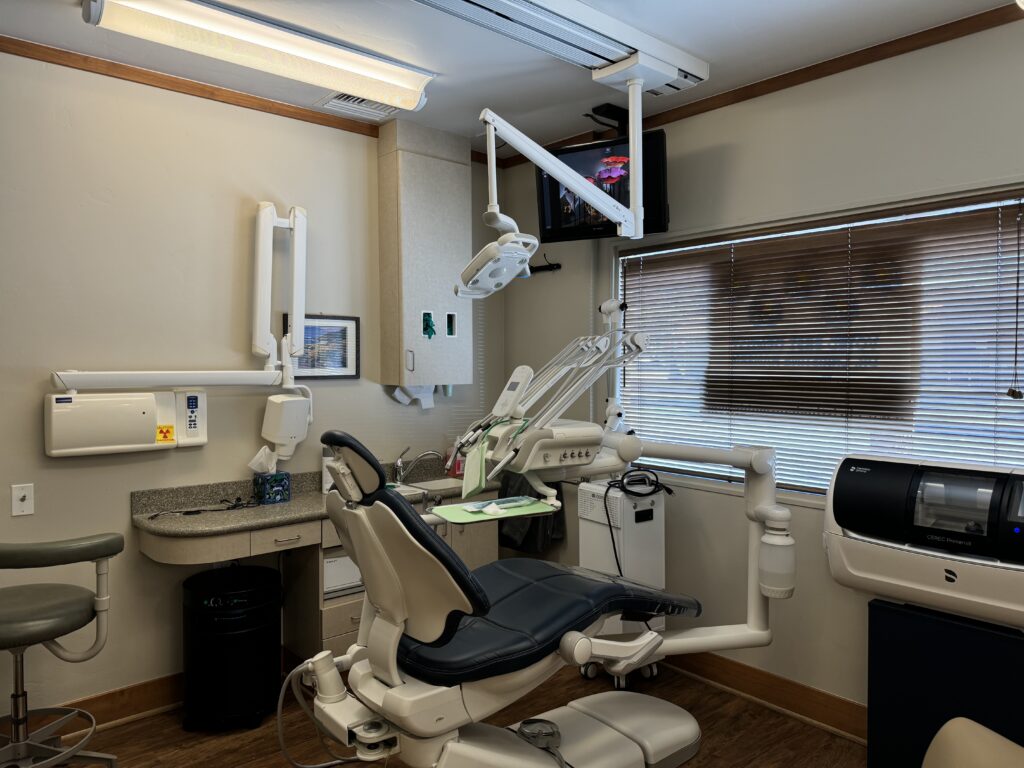
But the real difference is what we can do with that image once it’s on screen. We can zoom in on a single tooth root, adjust the contrast to see early decay hiding between molars, or flip between views without taking another shot. With film, what you got was what you got. Now we catch things we would’ve missed ten years ago.
Here’s what matters most to you:
We see patients in Palo Alto who haven’t had x-rays in years because they remember the old way. The bulky film, the gagging, the long wait. Most of them are surprised how quick and easy digital x-rays feel now. Patients near Barron Park especially seem to put this off, then wonder why they waited so long.
The images are also better for you to understand. Instead of holding a tiny film up to a light and squinting, you’ll see your teeth on a large monitor. We’ll point to exactly what we’re looking at. You’ll actually see the problem yourself, and that makes the conversation about next steps a lot easier for both of us.
You sit down. We chat for a minute. Then we get right to it.
Our team walks you through every step before anything happens. If you’re coming in from the Crescent Park area or anywhere else in Palo Alto, the process is the same. You’ll check in, we’ll review your dental history, and then we’ll move to the digital x-ray itself. The whole thing is faster than most people expect.
Here’s how a typical digital x-ray appointment goes:
That last part matters. We don’t just take digital x-rays and disappear into a back room. You see what we see. We point out the tooth structure, any areas of concern, bone levels around your teeth. It’s your mouth. You should understand what’s going on in there.
Almost everyone tells us it was way easier than they thought.
There’s no film to develop, no waiting around. The radiation exposure is also dramatically lower than traditional x-rays. According to the American Dental Association, digital sensors can reduce radiation by up to 80 percent compared to conventional film. That’s a big deal, especially if you need multiple images taken during a single visit.
If we spot something that needs attention, we can talk about next steps right then. Maybe it’s a dental filling. Maybe it’s something we want to monitor at your next periodic oral examination. Either way, you won’t leave confused. The image stays in your digital file here in Palo Alto so we can compare it to future scans and track any changes over time.
Most appointments wrap up in under 20 minutes. Quick, clear, done.
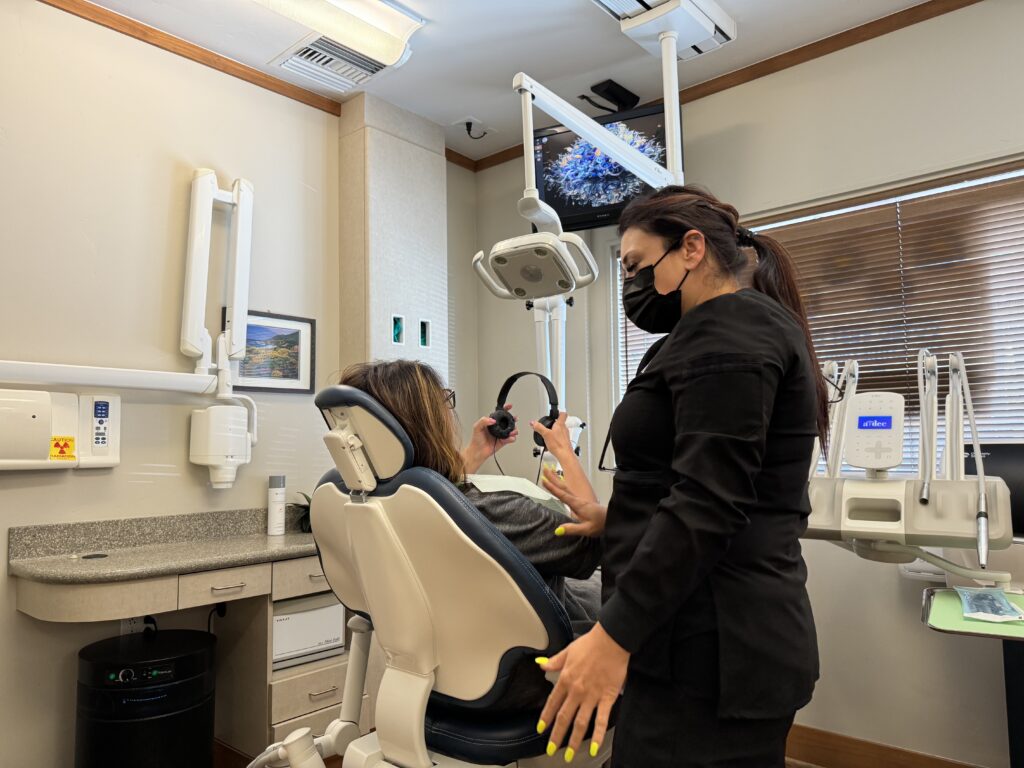
You won’t be left wondering what we found.
One of the best parts about digital x-rays is how fast the images show up. The moment we capture your image, it’s on a screen right next to your chair. No waiting for film to develop. No squinting at tiny negatives held up to a light box. You see exactly what we see, and we walk through every detail together. Most of our Palo Alto patients tell us this is the first time they’ve actually understood what’s happening inside their own mouth.
We pull up the image, zoom into the area that matters, and point things out in plain language. A shadow near a root. A gap between a crown and the tooth underneath. Early bone changes you’d never feel on your own. Once patients can actually look at the problem on screen, most say “oh, now I get it” right away. That visual clarity changes the whole conversation.
And sharing these images is simple. If you need to see a specialist or want a second opinion, we send your digital x-rays electronically. No bulky envelopes, no lost films. The file goes straight to the other provider’s system. This matters a lot for patients near the Barron Park area who might be coordinating care between multiple offices.
Here’s what happens after we review your images together:
Your images also become a baseline. That’s something people don’t think about enough. When you come back in six months or a year, we can pull up your earlier digital x-rays and compare side by side. Small changes that would be invisible on their own become obvious when you stack two images next to each other. It’s how we catch problems early, before they turn into root canal therapy or extractions.
But the real point is this: you leave the office knowing what’s going on. Not guessing, not hoping we’ll call later with results. You saw it yourself, we talked about it, you have a plan.
You wake up with a throbbing tooth at 2 AM. Or maybe your kid falls off a bike near Midtown and chips a front tooth on the sidewalk. Your first instinct might be the ER. But here’s what most people don’t realize.
Emergency rooms don’t have dental X-ray equipment.
They can give you pain meds and check for a jaw fracture. But they can’t do a proper digital X-ray of your tooth, identify a crack below the gumline, or tell you whether the nerve is dying. That’s not their job, it’s ours. We see patients every week who spent hours in an ER waiting room only to get referred right back to a dental office.
So when does a local Palo Alto clinic make more sense? Most of the time. Here are the situations where you should call us first:
In each of these cases, a digital X-ray is the fastest path to a real answer. We can capture the image in seconds and show you exactly what’s happening inside the tooth. No guessing. No waiting for a referral that takes another week.
And if the X-ray reveals something that needs quick action, like an infection near the root, we can move straight into treatment the same day. Root canal therapy, a limited oral examination, even oral sedation if you need it. Everything stays under one roof near the Barron Park area.
The ER is the right call for uncontrolled bleeding, a broken jaw, or trauma that involves more than your teeth. But for dental pain? You’ll get faster answers and better care from a team that reads digital X-rays all day long. We’ve been doing this for years in Palo Alto, and the X-ray tells us exactly what you need within minutes of sitting down.

Digital x-rays show problems that have no symptoms yet. Cavities hiding between teeth, bone loss from gum disease, infections at the root tip, and impacted teeth are all invisible to the naked eye. A visual exam only shows what’s on the surface. The x-ray shows what’s happening inside the tooth and below the gumline. Catching these problems early usually means a simple filling instead of a root canal or extraction later.
Digital x-rays use up to 80 percent less radiation than traditional film x-rays, according to the American Dental Association. The exposure from a single digital image is extremely low. If you need multiple images in one visit, the total dose is still well below what you’d get from everyday activities like a short flight. For patients in Palo Alto who have avoided x-rays for years out of concern, this is usually reassuring news.
Most appointments wrap up in under 20 minutes. The sensor goes in your mouth, the image appears on screen within five seconds, and we review it together right away. There’s no film to develop and no waiting around. You check in, we take the images, and we walk you through exactly what we see before you leave. You won’t leave confused about what’s going on in your mouth.
No special preparation is needed before your appointment. Just brush your teeth as normal before you come in. If you have dental records or x-rays from a previous dentist, bringing those along is helpful so we can compare them to your new images. Let us know about any medical conditions or medications when you check in. That’s all we need from you to get started.
How often you need x-rays depends on your dental history and current health. New patients typically need a full set so we have a baseline to work from. After that, most adults get bitewing x-rays once a year. If you have a history of cavities, gum disease, or other concerns, we may recommend them more often. We look at your individual situation and only take images when there’s a clinical reason to do so.
Yes, you see the results immediately. The images appear on a screen right next to you within seconds of being taken. We review them together during the same appointment and explain what we’re looking at in plain terms. If we find something that needs attention, we talk about next steps right then. Your images are saved in your digital file so we can compare them at future visits and track any changes over time.

If you spend much time around University Avenue or grab coffee at Town & Country Village, you see a lot of great smiles. But for many people in our neighborhood, showing their teeth in photos makes them feel shy. Maybe you have a chip from a bike ride at Shoreline Park or your teeth have just gotten yellow over the years from too many lattes. If you are looking for a dentist in Palo Alto, you want someone who can make you look like yourself, just better.
We see so many people from Crescent Park and Midtown who want to fix their smile but don’t want to look “fake.” Finding a dentist in Palo Alto who understands that local, natural look is a big deal. We treat our patients like friends we run into at the California Avenue Farmers’ Market. We want you to feel confident whether you are giving a big talk at Stanford or just meeting friends for dinner in Old Palo Alto.
Most people come to us because they want a Cosmetic Dentist they can trust. A lot of folks ask, “Who is the best cosmetic dentist near me?” The answer is usually someone who listens more than they talk. We don’t just push expensive treatments. We look at your whole face and figure out what will make you feel the most happy.
In a town like Palo Alto, people care about the details. Whether you work in tech or are raising a family in Barron Park, you want your dental work to last. We use the best materials because we want your smile to stand up to real life. Being a Cosmetic Dentist is about more than just white teeth; it’s about making everything line up and feel right when you bite down.
If you have gaps, deep stains, or crooked teeth that you want to fix all at once, Porcelain Veneers are usually the answer. Last year, a local professor came to us because he hated how his teeth looked on Zoom. We used veneers to give him a smile that looked totally real but way brighter.
Porcelain Veneers are very thin shells of ceramic that we bond to the front of your teeth. They are super strong and they don’t stain like regular teeth do. Because we custom-make them for your mouth, we can pick the exact shade and shape. This is a great way to get a “smile makeover” in just a couple of visits. We make sure they match your other teeth so nobody even knows you had work done.
Sometimes you don’t need a whole new smile; you just need to fix one or two small things. That is where Composite Bonding is perfect. If you have a small chip on a front tooth or a little gap that bugs you, we can fix it in one visit.
During Composite Bonding, we use a tooth-colored resin that is kind of like clay. We shape it right on your tooth and then harden it with a special light. It’s much cheaper than veneers and it looks great. A lot of students at Paly High come in for this after sports accidents. It’s a quick way to get your smile back to normal without a big dental bill.
Have you ever felt like your teeth look too short or that your smile is too “gummy?” This is actually really common. We use Gum Contouring to fix the shape of your gum line. We gently remove a little bit of the extra tissue to show off more of your teeth.
Gum Contouring makes a huge difference in how your face looks. It balances everything out. We use modern tools so it heals realy fast and doesn’t hurt much at all. Most people from the Green Gables neighborhood who get this done tell us they can’t believe they waited so long to do it. It’s a small change that makes your whole smile look way more professional and clean.
We know there are a lot of offices to choose from when you look for a dentist in Palo Alto. Here is some honest advice we give our friends:
We love being part of the Palo Alto community and seeing our patients out and about in College Terrace or at the Stanford Shopping Center. If you are ready to love your smile again, come talk to us. We don’t do high-pressure sales; we just want to help you look your best.