
Maybe you wake up with a sore jaw. Or you notice a click when you chew. Most people brush it off for weeks, sometimes months. We see this all the time in our Palo Alto office.
But here’s the thing. Not every pop or ache means trouble. And not every quiet jaw is a healthy one. So how do you know when it’s time to stop guessing?
A few signs tell us a TMJ/TMD evaluation should happen sooner rather than later:
Most people who call us have been dealing with at least two of those for a while. They’ve tried softer foods, heat packs, even night guards from the drugstore. Nothing sticks because they’re treating symptoms without knowing the cause.
One scenario we run into constantly: someone near Crescent Park comes in thinking they need a root canal. Their back teeth ache, their bite feels off. Turns out the real problem is joint dysfunction putting pressure on everything around it. A proper evaluation changes the whole picture.
Pay attention to patterns, too. Pain that shows up every morning points to nighttime clenching. Pain that builds through the day usually means your jaw mechanics are off during normal use. Those details matter a lot when we’re figuring out what’s going on.
Not sure if what you’re feeling qualifies? That’s actually pretty common. Most jaw problems don’t announce themselves in obvious ways. They creep in slowly, disguised as earaches or tension headaches or “just stress.” If you’ve been wondering for more than a couple weeks, it’s worth checking out.
Most people walk in a little nervous. They’ve been dealing with jaw pain for weeks or months. Sometimes years. And they’re not sure what to expect from the appointment itself.
Here’s exactly what we do.

The whole process takes longer than a typical dental visit. Rushing through a TMJ/TMD evaluation means missing things.
We also ask about headaches, ear fullness, and neck stiffness. A lot of patients don’t connect those symptoms to their jaw, but they’re often part of the same picture.
By the end of the visit, you’ll know what’s going on. Not a guess. Not a “let’s wait and see.” We sit down with you right here in our Palo Alto office and walk through what we found, what it means, and what your real options look like. Some cases call for a simple night guard. Others need more targeted treatment like Botox for TMJ. And some patients benefit from a sleep apnea evaluation because the two conditions overlap more than most people realize.
Here’s something that surprises a lot of our Palo Alto patients. Jaw pain isn’t always a jaw problem.
We see this constantly. Someone comes in sure they have TMD, but the real cause turns out to be something else entirely. That’s why a proper TMJ/TMD evaluation spends so much time ruling things out. A wrong diagnosis means wrong treatment, and wrong treatment means you’re still hurting six months from now.
Several conditions can feel almost identical to TMD:
So how do we tell the difference? We look at the full picture. Digital X-rays show us bone and tooth structure. Joint sounds tell us about disc position. Muscle palpation reveals tension patterns that point toward one diagnosis over another. And your history matters a lot: when the pain started, what makes it worse, whether it’s constant or comes and goes.
The pattern usually becomes clear once we put all the pieces together.
But sometimes we need to coordinate with your physician. If we suspect a nerve condition or an ear problem, we’ll say so directly. Patients near Crescent Park have told us they spent months bouncing between providers before anyone connected the dots. That’s frustrating, and it shouldn’t happen. Our goal is to either confirm TMD or point you toward the right specialist fast.
A thorough evaluation doesn’t just find what’s wrong. It eliminates what isn’t. You walk out knowing exactly where you stand instead of guessing for another year.

A little prep goes a long way. Most people who come to our Palo Alto office aren’t sure what to bring or what to expect, so here’s what actually helps us help you.
Start paying attention to your symptoms about a week before your visit. We’re going to ask you specific questions, and having real answers makes the whole TMJ/TMD evaluation more useful. You don’t need a journal. Just mental notes.
What to Track Before You Come In
Patients near Midtown or Crescent Park often tell us they’ve been dealing with symptoms for months before booking. That’s fine. But the details from those months are useful for us.
If you grind your teeth at night, bring your night guard. Even an old one. We can learn a lot from the wear patterns on it. And if you’ve had previous dental X-rays taken elsewhere, ask that office to send them over before your appointment. It saves time and sometimes saves you from extra imaging.
Eat a normal meal before you come in. We’ll be asking you to open, close, and move your jaw in different directions. You want it warmed up, not stiff from skipping breakfast.
Skip the caffeine right before if you can. It can make clenching worse and tighten your jaw muscles, which makes it harder for us to feel what’s really going on during the hands-on part of the exam.
Palo Alto runs on brainpower. We see the effects of it every day in our office. High-pressure careers in tech, long hours at a desk, back-to-back meetings on a screen. Your jaw absorbs more of that stress than you’d ever guess. Most people clench without knowing it. They hold tension in their jaw the way others hold it in their shoulders. And by the time they notice the pain, the habit’s been going on for months.
Screen time makes it worse. When you’re focused on a monitor, your head drifts forward. Even an inch or two changes how your jaw sits. The muscles that open and close your mouth have to work harder in that position. Do that for eight or ten hours a day, five days a week, and those muscles get tired, tight, and sore.
Here’s what we hear from patients near Crescent Park and the Stanford Research Park area:
None of those are random. They follow a pattern we recognize right away during a TMJ/TMD evaluation.
Students deal with this too. The academic pressure in this community starts early and doesn’t let up through college. We’ve evaluated younger patients who grind their teeth so hard at night that the wear is visible on their molars. According to the National Institute of Dental and Craniofacial Research, TMD affects more than 10 million Americans. In a community where stress and screen time are baked into daily life, the risk factors stack up fast.
So if your jaw’s been acting up and you can’t figure out why, think about your last workday. How many hours at a screen? How tight was your jaw by 5 PM? That connection matters more than most people realize.
Bring a list of your symptoms, how long you’ve had them, and any treatments you’ve already tried. Include any night guards, medications, or supplements you use. If you have recent dental X-rays, bring those too. Notes about when your pain is worst — morning versus evening — help us a lot. The more detail you give us, the faster we can figure out what’s really going on with your jaw.
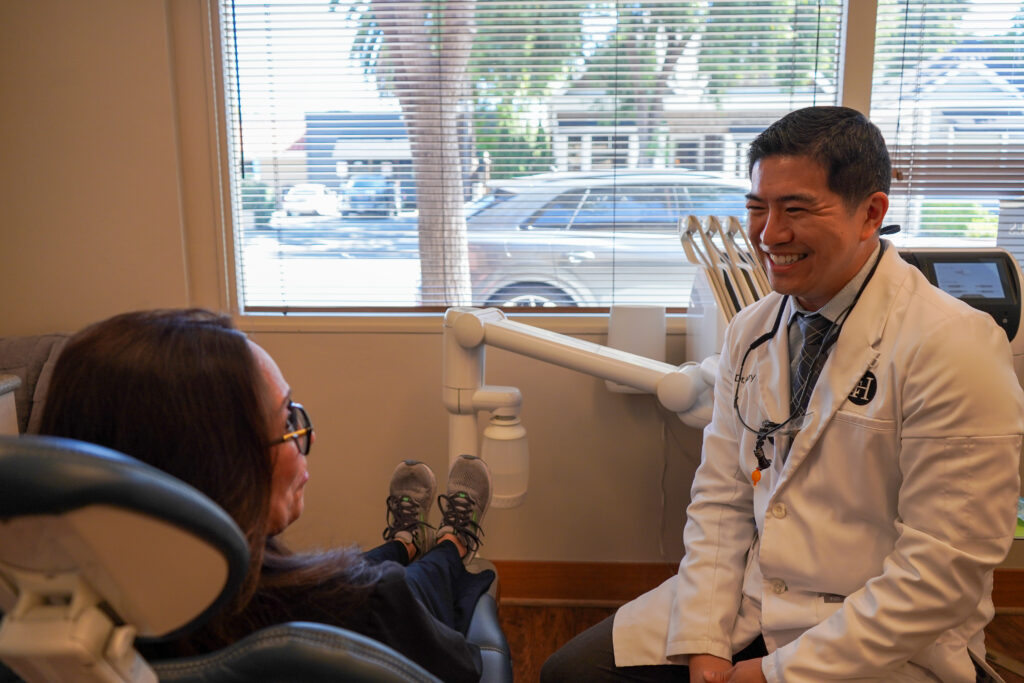
A thorough TMJ/TMD evaluation takes longer than a regular dental visit — usually 60 to 90 minutes. We listen to your history, check your jaw movement, press along your muscles, examine your bite, and take digital X-rays. Rushing through any of those steps means missing things. By the end, you’ll know what we found and what your real options are. No guessing, no ‘let’s wait and see.’
Yes, and this is more common than most people expect. Ear infections, sinus pressure, cracked teeth, and nerve conditions can all feel exactly like TMD. That’s why we spend so much of the evaluation ruling things out. We’ve seen Palo Alto patients near Crescent Park who spent months bouncing between providers before anyone connected the dots. A proper evaluation either confirms TMD or points you to the right specialist quickly.
Yes, intermittent pain is still worth evaluating. Pain that comes and goes often has a clear pattern — morning pain usually points to nighttime clenching, while pain that builds through the day often means your jaw mechanics are off during normal use. Those patterns give us real diagnostic information. Waiting until the pain is constant usually means the problem has gotten worse. If you’ve been wondering for more than a couple of weeks, come in.
Parking in Palo Alto can be tight depending on where our office is located, so we recommend arriving a few minutes early. We’re happy to answer parking questions when you call to book. On insurance, we work with many plans and will help you understand your coverage before your visit. We do not discuss specific costs here, but our front desk can walk you through everything before your appointment.
Right after your evaluation, we sit down with you and go over everything we found. You’ll know what’s causing your symptoms and what your options look like. Some patients need a simple night guard. Others benefit from Botox for TMJ or a sleep apnea evaluation, since those two conditions often overlap. You leave our Palo Alto office with a clear plan.

If you spend much time around University Avenue or grab coffee at Town & Country Village, you see a lot of great smiles. But for many people in our neighborhood, showing their teeth in photos makes them feel shy. Maybe you have a chip from a bike ride at Shoreline Park or your teeth have just gotten yellow over the years from too many lattes. If you are looking for a dentist in Palo Alto, you want someone who can make you look like yourself, just better.
We see so many people from Crescent Park and Midtown who want to fix their smile but don’t want to look “fake.” Finding a dentist in Palo Alto who understands that local, natural look is a big deal. We treat our patients like friends we run into at the California Avenue Farmers’ Market. We want you to feel confident whether you are giving a big talk at Stanford or just meeting friends for dinner in Old Palo Alto.
Most people come to us because they want a Cosmetic Dentist they can trust. A lot of folks ask, “Who is the best cosmetic dentist near me?” The answer is usually someone who listens more than they talk. We don’t just push expensive treatments. We look at your whole face and figure out what will make you feel the most happy.
In a town like Palo Alto, people care about the details. Whether you work in tech or are raising a family in Barron Park, you want your dental work to last. We use the best materials because we want your smile to stand up to real life. Being a Cosmetic Dentist is about more than just white teeth; it’s about making everything line up and feel right when you bite down.
If you have gaps, deep stains, or crooked teeth that you want to fix all at once, Porcelain Veneers are usually the answer. Last year, a local professor came to us because he hated how his teeth looked on Zoom. We used veneers to give him a smile that looked totally real but way brighter.
Porcelain Veneers are very thin shells of ceramic that we bond to the front of your teeth. They are super strong and they don’t stain like regular teeth do. Because we custom-make them for your mouth, we can pick the exact shade and shape. This is a great way to get a “smile makeover” in just a couple of visits. We make sure they match your other teeth so nobody even knows you had work done.
Sometimes you don’t need a whole new smile; you just need to fix one or two small things. That is where Composite Bonding is perfect. If you have a small chip on a front tooth or a little gap that bugs you, we can fix it in one visit.
During Composite Bonding, we use a tooth-colored resin that is kind of like clay. We shape it right on your tooth and then harden it with a special light. It’s much cheaper than veneers and it looks great. A lot of students at Paly High come in for this after sports accidents. It’s a quick way to get your smile back to normal without a big dental bill.
Have you ever felt like your teeth look too short or that your smile is too “gummy?” This is actually really common. We use Gum Contouring to fix the shape of your gum line. We gently remove a little bit of the extra tissue to show off more of your teeth.
Gum Contouring makes a huge difference in how your face looks. It balances everything out. We use modern tools so it heals realy fast and doesn’t hurt much at all. Most people from the Green Gables neighborhood who get this done tell us they can’t believe they waited so long to do it. It’s a small change that makes your whole smile look way more professional and clean.
We know there are a lot of offices to choose from when you look for a dentist in Palo Alto. Here is some honest advice we give our friends:
We love being part of the Palo Alto community and seeing our patients out and about in College Terrace or at the Stanford Shopping Center. If you are ready to love your smile again, come talk to us. We don’t do high-pressure sales; we just want to help you look your best.