
Most people don’t wake up one morning and think about their gum tissue. It’s usually something smaller that gets your attention first.
Maybe you’re brushing your teeth and notice one tooth looks longer than the others. Or you take a sip of cold water and feel a sharp zing near your lower front teeth. We hear this from patients in Palo Alto almost every week. They’ll say, “I thought it was just sensitivity,” and by the time they come in, the recession has already progressed.
Here are the most common signs we see:
Some of these seem minor on their own. But they add up. When the root surface of a tooth becomes exposed, it’s not just a cosmetic issue. That exposed root is softer than enamel and more vulnerable to decay and wear over time.
One thing that surprises people is where recession tends to show up first. It’s often on the canines or premolars, sometimes just on one side. Aggressive brushing with a hard-bristle toothbrush is a big culprit, but so is grinding your teeth at night or having naturally thin gum tissue.
Not sure if what you’re seeing is actually recession? That’s pretty common. During a periodic oral examination, we can measure the exact amount of tissue loss and tell you whether gum graft surgery makes sense now or if we should monitor it. Patients who come in early have more options and a smoother recovery.
The key is not to wait until you’re in pain. By then, the tissue loss is usually more advanced and the repair becomes a bigger job.
Not every mouth needs the same fix. That’s something we talk about with our Palo Alto patients every day. The type of gum graft we recommend depends on how much tissue you’ve lost, where the recession is, and what your gums look like right now.
Here’s a quick breakdown of the three main approaches:

So how do we decide? It starts with a close look at your gums during a limited oral examination. We check the thickness of your tissue, measure how far the recession goes, and look at the bone underneath. The answer becomes pretty clear once we see everything up close.
Some patients come in expecting one type but end up being a better fit for another. That’s normal. Your anatomy guides the decision, we just follow its lead.
All three types have strong track records. According to gum graft surgery clinical evidence from the ADA, gum graft surgery has a high success rate across all three techniques. What matters most is matching the right graft to your specific situation.
Most of our Palo Alto patients tell us the same thing after their gum graft surgery: “That was way easier than I thought.”
Here’s how the day actually goes.
You won’t feel pain during the procedure. Pressure, maybe. But not pain. That’s a promise we take seriously.
We use either tissue from the roof of your mouth or donor tissue. Both work well. We’ll have already decided which option fits your situation during your earlier visit. Patients are often surprised how quick the whole thing feels once we get going.
Bring someone to drive you home. Even if you skip sedation, your mouth will be numb for a while and you’ll want to just relax afterward. You can usually go home within 20 minutes of us finishing. There’s no long recovery room wait. You’ll have gauze in place, a printed sheet of instructions in your hand, and our direct number if anything feels off later that evening.
Wondering if you’re ready for this step? Give us a call and we’ll walk you through it.
The soreness kicks in once the numbness wears off, usually a few hours later. But we send you home prepared with clear guidance on what to eat, how to manage swelling, and when to take your medication. Most patients describe day one as “uncomfortable but totally manageable.”

Most of our patients are back to their normal routine faster than they expect.
The first 48 hours matter most. You’ll have some swelling and mild discomfort, that’s completely normal. We give you clear instructions before you leave our Palo Alto office so nothing catches you off guard at home. Ice packs help a lot during this window, and so does rest. Your body’s doing real healing work, let it.
Here’s what a typical recovery looks like after gum graft surgery:
Patients tell us recovery was easier than they imagined. The anxiety beforehand is usually worse than the actual healing.
A few things that help the process go smoothly. Don’t brush directly on the graft site for at least two weeks. Use the gentle mouth rinse we provide. Skip straws for the first week since the suction can disturb the tissue. And absolutely no smoking, that’s the single biggest thing that can slow your healing down.
We schedule a follow-up visit about ten days after your procedure. Our team checks the graft, removes any sutures if needed, and answers whatever questions have come up. Quick visit.
If something feels off before that appointment, call us. A little extra bleeding or soreness is normal, we just want to make sure you’re healing right on track.
We hear it all the time. “It doesn’t hurt, so I’ll wait.”
That’s the thing about gum recession. It doesn’t announce itself with pain. You might notice your teeth look a little longer than they used to. Maybe cold water hits different now. Or your dentist points out the recession during a periodic oral examination and you think, “I’ll deal with it later.” But later is where the real problems start, the tissue doesn’t grow back on its own.
Every month you wait, the gum line pulls back a little more. Tooth roots become exposed. And exposed roots aren’t protected by enamel like the rest of your tooth. They’re softer, more vulnerable to decay, and more sensitive to temperature. What starts as a cosmetic concern turns into a structural one pretty fast.
Here’s what we see happen when patients in Palo Alto put off gum graft surgery too long:
The patients who need the most involved procedures are the ones who waited years after their first warning signs. A small area of recession that could’ve been a simple graft can be affecting multiple teeth just two years later.
When we catch it early, the procedure is straightforward. Less tissue to replace. Faster healing. Better long-term results. According to the American Academy of Periodontology, early intervention for gum recession leads to more predictable outcomes and helps preserve the tooth’s natural support.
So if someone’s already mentioned your receding gums, don’t file it away for next year. The window for the easiest fix is right now.
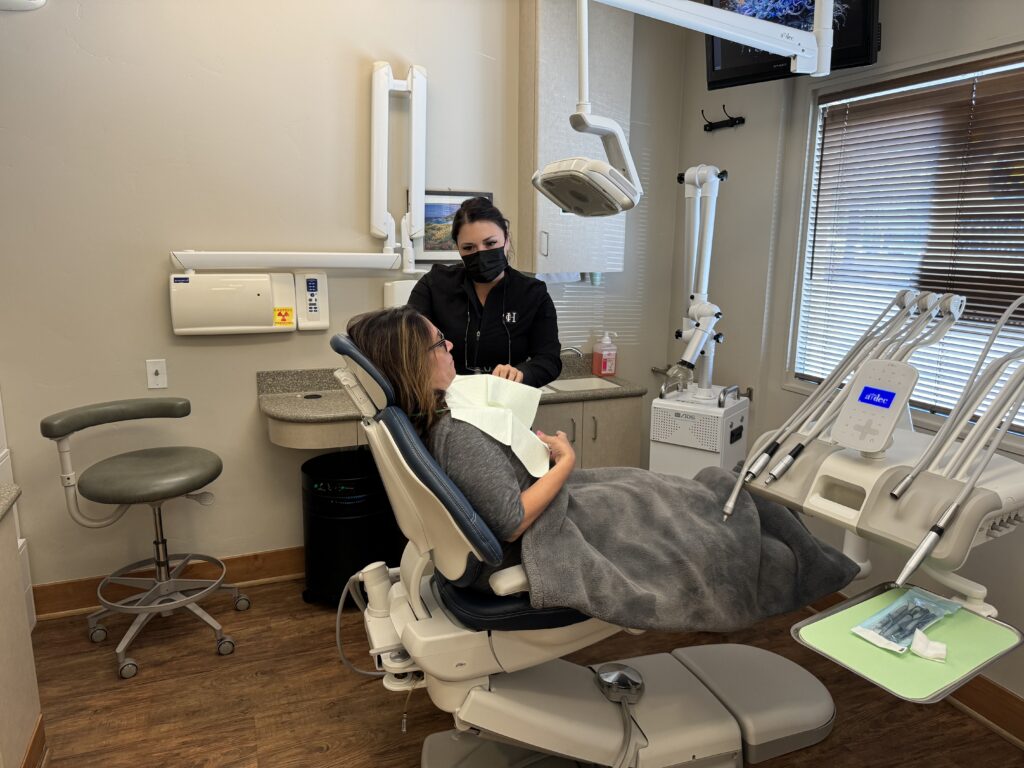
Most patients are back to their normal routine within one to two weeks. The first 48 hours involve the most swelling and discomfort. After that, things improve quickly. You’ll need to eat soft foods and avoid hard or crunchy items for about two weeks. Full tissue healing takes closer to four to six weeks. Patients who follow their aftercare instructions closely tend to bounce back faster and with fewer setbacks.
You won’t feel pain during the procedure itself. The area is fully numbed before we start. Most patients feel some pressure but nothing sharp. The soreness kicks in a few hours later, once the numbness wears off. Day one is uncomfortable but very manageable with the medication and guidance we send you home with. Most patients tell us afterward that it was much easier than they expected.
Yes, it’s one of the most common causes we see here. Many Palo Alto patients come in thinking they’ve been doing everything right, but a hard-bristle toothbrush used with too much force wears away gum tissue over time. Grinding your teeth at night and naturally thin gum tissue are also big contributors. Switching to a soft-bristle brush and correcting your technique can slow future recession after your graft heals.
Eat a good breakfast the morning of your procedure. Skip coffee that day. Wear a comfortable, loose-fitting shirt. Most importantly, arrange for someone to drive you home. Even if you don’t use sedation, your mouth will be numb for a while and you’ll want to rest afterward. We’ll go over everything one more time when you arrive, so there’s nothing to memorize in advance. Just show up ready to relax.
Your anatomy guides that decision more than anything else. We look at how thick your gum tissue is, how far the recession has progressed, and whether there’s enough healthy tissue nearby to work with. Patients who’ve had braces often need a free gingival graft for extra thickness. Others do best with a connective tissue graft. We make the call during your examination, not before. It’s common for patients to come in expecting one type and end up being a better fit for another.
The exposed root surface gets more vulnerable over time. Root tissue is softer than enamel, so it wears down faster and is more prone to decay. The longer recession goes untreated, the more tissue is lost and the more involved the repair becomes. Patients who come in early have more treatment options and tend to recover more smoothly. If you’re noticing sensitivity or teeth that look longer than before, it’s worth getting it checked now rather than later.

If you spend much time around University Avenue or grab coffee at Town & Country Village, you see a lot of great smiles. But for many people in our neighborhood, showing their teeth in photos makes them feel shy. Maybe you have a chip from a bike ride at Shoreline Park or your teeth have just gotten yellow over the years from too many lattes. If you are looking for a dentist in Palo Alto, you want someone who can make you look like yourself, just better.
We see so many people from Crescent Park and Midtown who want to fix their smile but don’t want to look “fake.” Finding a dentist in Palo Alto who understands that local, natural look is a big deal. We treat our patients like friends we run into at the California Avenue Farmers’ Market. We want you to feel confident whether you are giving a big talk at Stanford or just meeting friends for dinner in Old Palo Alto.
Most people come to us because they want a Cosmetic Dentist they can trust. A lot of folks ask, “Who is the best cosmetic dentist near me?” The answer is usually someone who listens more than they talk. We don’t just push expensive treatments. We look at your whole face and figure out what will make you feel the most happy.
In a town like Palo Alto, people care about the details. Whether you work in tech or are raising a family in Barron Park, you want your dental work to last. We use the best materials because we want your smile to stand up to real life. Being a Cosmetic Dentist is about more than just white teeth; it’s about making everything line up and feel right when you bite down.
If you have gaps, deep stains, or crooked teeth that you want to fix all at once, Porcelain Veneers are usually the answer. Last year, a local professor came to us because he hated how his teeth looked on Zoom. We used veneers to give him a smile that looked totally real but way brighter.
Porcelain Veneers are very thin shells of ceramic that we bond to the front of your teeth. They are super strong and they don’t stain like regular teeth do. Because we custom-make them for your mouth, we can pick the exact shade and shape. This is a great way to get a “smile makeover” in just a couple of visits. We make sure they match your other teeth so nobody even knows you had work done.
Sometimes you don’t need a whole new smile; you just need to fix one or two small things. That is where Composite Bonding is perfect. If you have a small chip on a front tooth or a little gap that bugs you, we can fix it in one visit.
During Composite Bonding, we use a tooth-colored resin that is kind of like clay. We shape it right on your tooth and then harden it with a special light. It’s much cheaper than veneers and it looks great. A lot of students at Paly High come in for this after sports accidents. It’s a quick way to get your smile back to normal without a big dental bill.
Have you ever felt like your teeth look too short or that your smile is too “gummy?” This is actually really common. We use Gum Contouring to fix the shape of your gum line. We gently remove a little bit of the extra tissue to show off more of your teeth.
Gum Contouring makes a huge difference in how your face looks. It balances everything out. We use modern tools so it heals realy fast and doesn’t hurt much at all. Most people from the Green Gables neighborhood who get this done tell us they can’t believe they waited so long to do it. It’s a small change that makes your whole smile look way more professional and clean.
We know there are a lot of offices to choose from when you look for a dentist in Palo Alto. Here is some honest advice we give our friends:
We love being part of the Palo Alto community and seeing our patients out and about in College Terrace or at the Stanford Shopping Center. If you are ready to love your smile again, come talk to us. We don’t do high-pressure sales; we just want to help you look your best.