
Winter in Palo Alto comes with its own set of challenges. Cozy scarves, steaming hot coffee, and crisp morning air are all part of the season; however, for many, winter also brings a sharp, unexpected pain when cold air or icy drinks come into contact with their teeth and gums. That sudden “zing” isn’t just uncomfortable—it’s a signal from your teeth that something is exposing your sensitive inner layers. Understanding the science behind this discomfort can help you protect your smile and enjoy winter without wincing every time you sip a cold drink or temperatures drop.
The Biology of the “Zing”: Why Cold Hurts
What causes dental hypersensitivity when consuming cold substances? The dental term for this is dentinal hypersensitivity, a common condition affecting millions of people. To understand this phenomenon, one must examine the anatomical structure of the teeth.
Beneath the outer enamel lies dentin, a slightly softer tissue filled with microscopic fluid-filled channels called dentinal tubules. These tubules run directly to the pulp, the innermost part of the tooth containing nerves and blood vessels. When these tubules are exposed because of enamel erosion or gum recession, the pulp becomes more sensitive to external stimuli, including cold air, icy beverages, or even cold winter winds.
The process works like this:
- Cold air or a chilled liquid (such as cold water) hits your exposed dentin.
- The sudden temperature change causes the fluid inside the tubules to contract rapidly and move outward.
- This fluid movement stimulates nerve endings in the pulp.
- The brain interprets this as a sharp, sudden pain—the “zing” you feel.
This explanation aligns with the Brännström Hydrodynamic Theory, which is the widely accepted mechanism of dentinal hypersensitivity. In simple terms, cold moves the fluid, the nerves react, and you feel pain.
The Causes: Why Your Dentin Is Exposed
Not everyone experiences winter tooth pain, so what makes some people’s teeth more vulnerable than others? Several factors contribute to dentin exposure:
1. Gum Recession
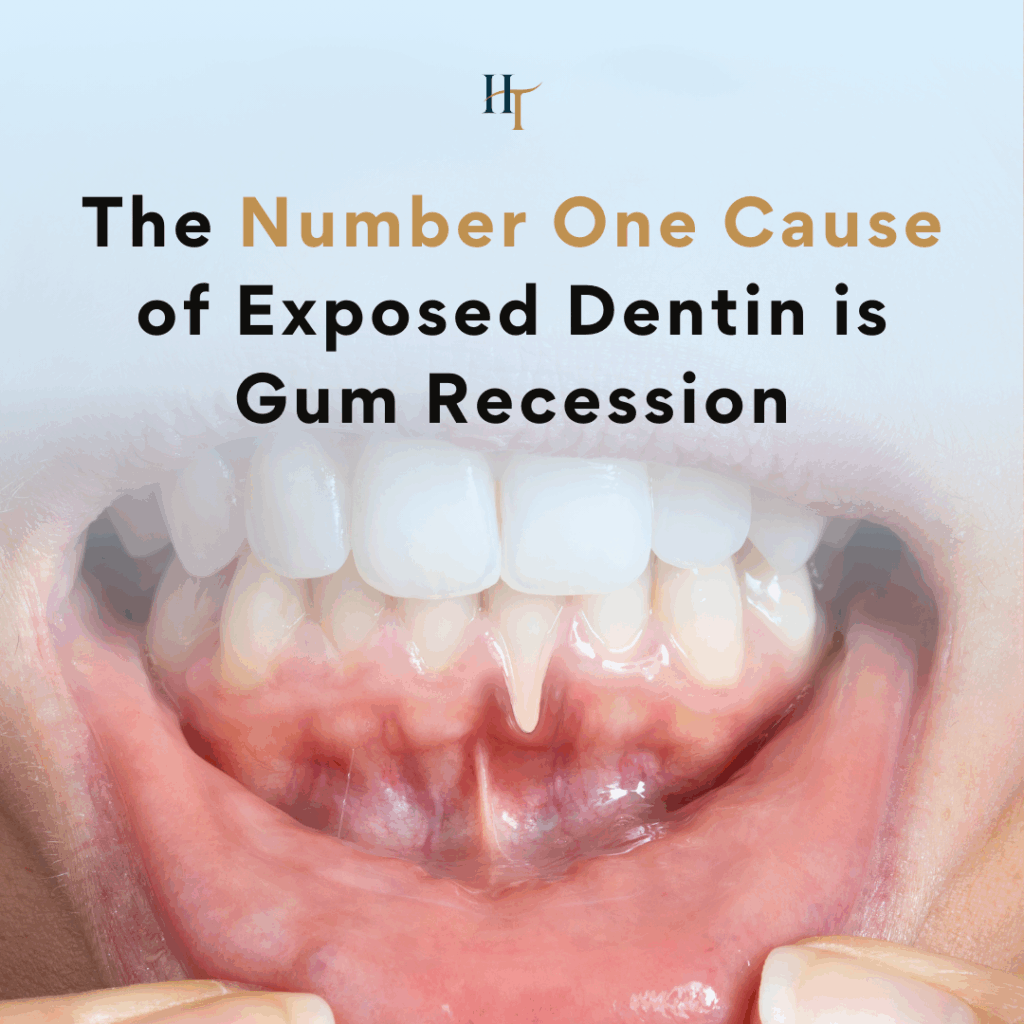
The number one cause of exposed dentin is gum recession. This occurs when the gums pull back from the teeth, often because of aggressive brushing, gum disease, or aging. Receded gums expose the cementum, a thin layer covering the dentin that wears away easily, leaving the sensitive inner dentin unprotected.
2. Enamel Erosion
Although dental enamel provides a strong protective layer, it is still vulnerable to damage. Acidic foods such as citrus, sodas, and even stomach acid from reflux can gradually erode enamel. Over time, this thinning makes teeth more susceptible to temperature changes on affected areas.
3. Micro-Cracks
Winter brings extreme temperature fluctuations, especially if you like to sip hot coffee outdoors in the cold. These repeated expansions and contractions can cause tiny, invisible fractures in the enamel, allowing cold air access to the dentin beneath.
Understanding these causes is crucial—dentinal hypersensitivity isn’t just “normal winter pain.” It signals that your teeth are more vulnerable and require attention.
What Actually Works: Evidence-Based Relief
Fortunately, there are effective ways to treat sensitive teeth in winter and prevent pain before it starts.
Desensitizing Toothpaste
Toothpaste containing potassium nitrate or strontium chloride can significantly reduce sensitivity. These ingredients work by either:
- Blocking nerve signals to reduce the pain response
- Physically plugging the dentinal tubules to prevent fluid movement
Tip: Consistency is key—use the toothpaste twice daily for 2–4 weeks to see meaningful results.
In-Office Varnishes & Sealants
For faster relief, professional treatments are highly effective. At Dr. Tseng and Associates, we can apply fluoride varnishes or bonding resins directly to exposed dentin. These professional-strength treatments seal the tooth immediately, offering instant protection against cold air.
Protective Measures
- Proper Brushing: Switch to a soft-bristle brush and use gentle circular motions to prevent further gum recession.
- Winter Defense: When outdoors in extreme cold, cover your mouth with a scarf or breathe through your nose to protect your teeth. This simple step significantly reduces exposure to cold air and minimizes sensitivity.
Implant and Metal Concerns
Many patients worry about the effects of implants or other metal devices during winter. Here’s the reassurance you need:
Dental Implants
Titanium dental implants are embedded deep within the jawbone. They do not contain dentin or nerves and are not sensitive to cold air. However, if the porcelain crown on the implant or the surrounding gums are exposed to the cold, you may experience discomfort nearby. The implant itself remains unaffected.
Orthopedic Implants
Similarly, deep-set metal rods in the body (e.g., your hips or legs) are insulated by bone, tissue, and muscle. Some people may feel a dull ache because of changes in barometric pressure or joint fluid viscosity, but the metal itself is not influenced by outside temperatures.
Conclusion: Don’t Suffer Through Winter
Dental discomfort during the winter months is not an inevitability. With proper care and professional guidance, you can enjoy winter without wincing at every icy sip or gust of wind. The key is to address exposed dentin before it leads to decay or increased sensitivity.
If you are experiencing winter-related dental sensitivity, prompt clinical consultation is advised. Schedule a professional check-up with Dr. Tseng and Associates in Palo Alto. Our team can diagnose the cause and apply immediate, clinically proven treatments to ensure a comfortable, pain-free winter.
FAQ: Winter Tooth Sensitivity
Q1: Could untreated dental sensitivity worsen over time?
Yes. Ignoring sensitivity can lead to enamel erosion, increased risk of cavities, and progression of gum disease. Early treatment prevents long-term damage.
Q2: How long is the typical timeframe for desensitizing toothpaste to become effective?
Most patients notice improvement within 2–4 weeks of consistent use. Professional in-office treatments provide faster relief.
Q3: Are certain foods more likely to trigger sensitivity in winter?
Yes. Cold drinks, ice cream, and acidic foods like citrus can exacerbate dentinal hypersensitivity. Avoiding extremes and rinsing with warm water afterward can help.
Q4: Do dental implants experience sensitivity when exposed to cold temperatures?
No. Titanium implants are deep in the bone and lack nerves. Any discomfort is usually caused by the surrounding gums or the porcelain crown, not the implant itself.
Q5: What measures can be taken to prevent long-term dental sensitivity during winter?
- Use a soft-bristle toothbrush and proper technique
- Limit acidic foods and beverages
- Apply professional fluoride treatments when recommended
- Cover your mouth in cold weather
Seasonal dental discomfort is not an inevitable consequence of the winter months. With simple preventive measures and professional guidance from Dr. Tseng and Associates, you can enjoy every hot cocoa and chilly breeze without discomfort.
Book your appointment today and protect your smile all winter long!