
Think of inlays and onlays as the middle ground. A filling handles small damage. A crown covers the entire tooth. But what about the stuff in between? That’s exactly where inlays and onlays fit, and we place them more often than most people realize here in Palo Alto.
A filling works great when decay is minor. You lose a little tooth structure, we pack it in, you’re done. But once the damage gets bigger, a regular filling can’t hold up long term. It’ll crack. It’ll leak. And then you’re back in the chair with a worse problem than you started with.
A crown goes the other direction. We remove tooth structure all the way around to cap the whole thing. That’s the right call when a tooth is really broken down. But if the tooth still has solid walls and good structure, crowning it means removing healthy material you didn’t need to lose.
Inlays and onlays split the difference. Here’s how they’re different from each other:
We see this every week. Someone comes in from the Crescent Park area with an old silver filling that’s starting to fail. The tooth isn’t far gone enough for a crown. A new filling won’t last. An onlay saves that tooth and keeps it strong for years.
The American Dental Association notes that indirect restorations like inlays and onlays can preserve more natural tooth structure than full crowns. That matters. Your natural tooth is always the best foundation.
So if you’ve been told you need “something more than a filling,” this is probably what we’re talking about. Not a bigger deal. Just the right-sized fix.
You bite into something crunchy and feel a sharp zing. Or maybe you notice food keeps getting stuck in the same spot every time you eat. These are the kinds of things that bring people into our Palo Alto office week after week.
Not every damaged tooth needs a full crown. And not every cavity is small enough for a simple filling. That’s where inlays and onlays fit in.
Here are the most common signs we look for:

We see this every week. Someone comes in thinking they just need a small fix, we take digital X-rays, and there’s a fracture line running right through an old silver filling. The tooth structure around it has weakened over time. A regular filling won’t hold. But a crown would mean removing healthy tooth material that doesn’t need to go. So an inlay or onlay becomes the right call.
Plenty of our patients near Midtown come in saying “it’s probably nothing.” Nine times out of ten, there’s more going on than what they can see in the mirror. Tooth damage on the biting surface can feel minor for months before it suddenly gets worse. Dental research shows cracks in teeth can spread quickly once the structure is compromised. Catching it early makes all the difference.
The honest truth is you can’t diagnose this at home. But you can pay attention to what your tooth is telling you. Pain that comes and goes, sensitivity that wasn’t there six months ago, a rough edge your tongue keeps finding. These are your tooth asking for help. We’d rather see you now and confirm it’s small than wait until the damage reaches the nerve and you’re looking at root canal therapy instead.
You sit down. We talk. That’s how it starts.
Before anything else, we’ll look at your tooth together using our digital X-rays and an intraoral camera. You’ll see exactly what we see on the screen. Most people who come to our Palo Alto office already know something feels off, maybe a crack they can see or a filling that’s been there since college. We’ll show you the damage up close so you understand why inlays and onlays make sense for your specific situation.
Here’s the part that surprises people. The process is pretty calm.

You care about how your smile looks. That’s not vanity. It’s just reality for people living and working in a place like Palo Alto where first impressions happen fast.
Old-school metal fillings did the job, but they stood out every time you laughed or opened wide. Inlays and onlays made from porcelain or composite resin match your natural tooth shade so closely that even you’ll forget which tooth was repaired. We color-match right here in our office using your surrounding teeth as a guide, so the result blends in completely.

But looks aren’t the whole story. Tooth-colored materials bond directly to your tooth structure, creating a tight seal that metal can’t match. Metal fillings sit inside the tooth like a wedge and can expand and contract with temperature changes over time. That movement sometimes leads to tiny cracks or gaps where bacteria sneak in. Porcelain inlays and onlays don’t do that. They stay stable.
Here’s something we tell patients near the Crescent Park neighborhood all the time: if you already have an old silver filling that’s starting to show wear, replacing it with an inlay or onlay can actually strengthen the tooth rather than just patch it again.
The practical benefits stack up quickly:
Tooth-colored restorations have become the standard of care for most back-tooth repairs. Our patients in Palo Alto consistently tell us they wish they’d made the switch sooner.
We tell our Palo Alto patients the honest truth. A well-made inlay or onlay can last 15 to 30 years. Some last even longer. But that range depends almost entirely on you.
The material matters, sure. Porcelain and ceramic hold up well under daily chewing forces. They resist wear better than direct fillings and don’t shrink over time. Research published in the Journal of Prosthetic Dentistry shows indirect restorations like inlays and onlays have higher longevity rates than traditional fillings in posterior teeth. That’s not a small difference.

Protecting your inlays and onlays doesn’t require anything complicated. Brush twice a day. Floss around the restoration just like you would a natural tooth. And if you grind your teeth, talk to us about a night guard. Patients near Midtown who bike or play sports should also consider a mouthguard. One bad hit can crack even the strongest ceramic.
Come in for your regular cleanings. We use those visits to check how your restoration is holding up, look for any wear patterns, and clean areas your brush can’t reach. It’s the simplest thing you can do to get the most years out of your investment.
You put time and care into getting this done right. Protecting it takes very little effort, it just takes consistency.
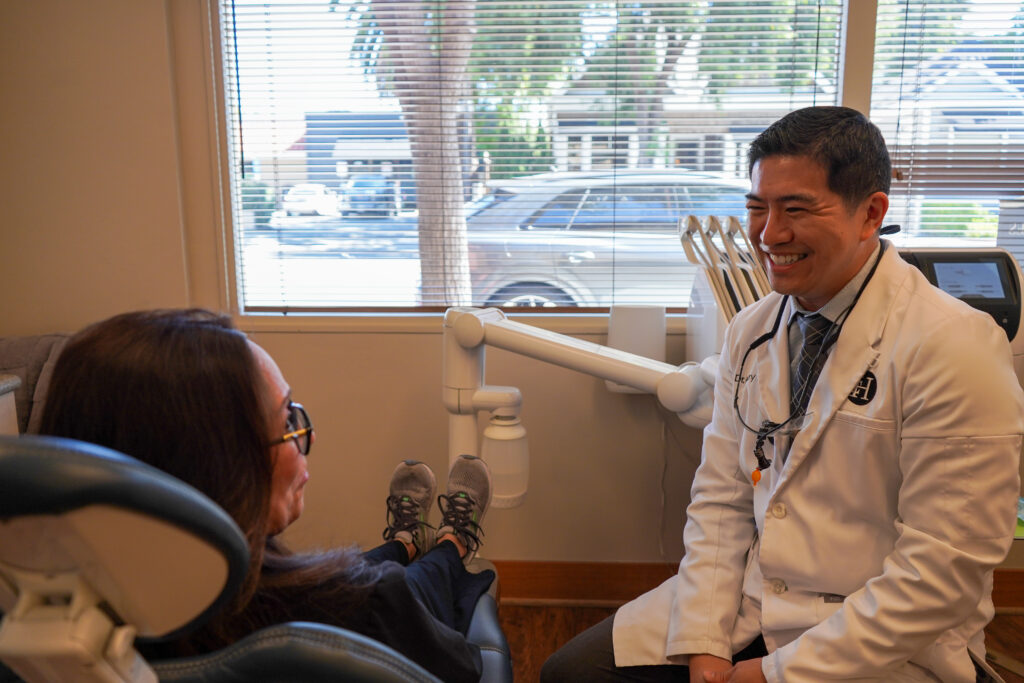
Patients near the Barron Park area and across Palo Alto tell us they forget about follow-up visits once everything feels normal. That’s actually pretty common. But catching a small issue early saves you from a big fix later.
Dentures need overnight soaking in a proper cleaning solution. Never use hot water. It warps the base material. Remove them at night to let your gums rest. And bring them to your checkups so we can look for wear spots or fit changes.
One thing people don’t expect: your mouth changes over time. Bone shifts. Gums recede slightly. A denture that fit perfectly two years ago might need a reline. We check for this at every visit because a poor fit leads to sore spots, trouble eating, and frustration you don’t need.
The goal is simple. Keep what we built working for years. Your part is the daily stuff. Our part is watching for anything you can’t see on your own.
We know that getting dental work done is an investment in yourself. Here is some advice we share with our friends in the community:
If you grind your teeth at night, get a night guard to protect your new crowns and implants.
Even if your new teeth can’t get cavities, your gums can still get sick. Flossing keeps the foundation strong.
We love talking about the tech we use. We can show you the difference between different types of porcelain so you know exactly what you are getting.
An inlay or onlay is a custom-made restoration that fits your tooth precisely, while a regular filling is packed in place chairside. Fillings work well for small damage. But when decay or a crack is larger, a filling can crack or leak over time. An inlay or onlay bonds directly to your tooth and holds up much longer. You keep more of your natural tooth than you would with a crown. That’s a real win.
Most patients in Palo Alto finish the process in two visits, about two weeks apart. At the first visit, we remove the damaged material, shape the tooth, and take a digital scan. A temporary cover protects the tooth while the lab crafts your custom piece. At the second visit, we fit, bond, and polish the final restoration. The second appointment usually takes less than an hour. Many patients tell us it was easier than they expected.
Yes, your inlay or onlay will be matched to your natural tooth shade so it blends right in. We use porcelain or ceramic material that reflects light the way real teeth do. Nobody will be able to tell you had work done. This matters a lot to patients here in Palo Alto who want their smile to look clean and natural. You get a strong restoration and a result that looks like it was always part of your tooth.
You don’t need to do much to prepare for your first visit. Eat a normal meal beforehand since your tooth will be numb for a couple of hours after. Let us know if you feel anxious — we offer nitrous oxide and oral sedation. After your first appointment, avoid sticky foods on the treated side while the temporary is in place. That’s really it. We’ll walk you through everything when you arrive so you know exactly what to expect.
Yes, and this is one of the most common reasons patients come to us here in Palo Alto. Old silver fillings can crack, leak, or weaken the tooth walls around them over time. When that happens, a new filling often won’t hold. But the tooth may not need a full crown either. An onlay can cover the damaged area, bond to the healthy structure that remains, and give that tooth years of strong, reliable function again.
The right choice depends on how much of your tooth is damaged and where the damage is. An inlay fits inside the cusps for mid-sized damage. An onlay extends over one or more cusps when the biting surface is involved. A crown is the call when the whole tooth is broken down. We use digital X-rays and an intraoral camera so you can see exactly what we see. You’ll understand the recommendation before we do anything.
We understand that whether you are a student at Stanford or a professional heading to a board meeting, your time and confidence are paramount. We use the “Gold Standard” of materials—from medical-grade titanium for dental implants to aesthetic porcelain for crowns—to ensure your results look natural and feel comfortable.
Contact us today to schedule your restorative consultation. We’ve been helping our Palo Alto neighbors chew, speak, and smile with confidence for years—and we can’t wait to do the same for you.
It happens to everyone eventually. You are enjoying a nice dinner at Town & Country Village or grabbing a quick snack near the Stanford campus, and suddenly—crunch. You realize a old filling popped out or a tooth finally broke. If you live in neighborhoods like Old Palo Alto or Midtown, you know how busy life gets. You don’t have time to deal with a smile that doesn’t work right. Finding a reliable dentist in Palo Alto who can actually rebuild your teeth is a huge relief.
We see so many neighbors from Crescent Park and Barron Park who come in feeling frustrated because they can’t chew their favorite foods anymore. We want to help you feel like yourself again. As a local dentist in Palo Alto, we focus on fixing your mouth so it looks natural and lasts a long time.

When your teeth are really damaged or missing, you need the skills of an expert dentist.
We handle everything from one broken tooth to a whole mouthful of new ones. We use the best labs and materials because we want your dental work to stand up to all the sourdough bread and coffee you can handle. We aren’t just fixing teeth; we are rebuilding your confidence so you can go to those big meetings in Silicon Valley without worrying about your smile.

Sometimes a cavity is too big for a regular filling but not quite big enough for a whole crown. That is when we use Inlays and Onlays.
Inlays and Onlays are like custom-made puzzle pieces. We make them in a lab so they fit perfectly into the space. They are much stronger than a normal filling. Because they are made of porcelain or composite, they match the color of your teeth. Most people can’t even tell where the tooth ends and the dental work begins. It is a great way to save as much of your natural tooth as possible.
If a tooth is weak, cracked, or had a root canal, we usually suggest Dental Crowns. You might hear people call these “caps.” They cover the whole tooth to protect it from breaking further. We see a lot of people who wait too long to get a crown, and then the tooth breaks so badly it has to come out. We don’t want that to happen to you!
We make Dental Crowns that look realy beautiful. We pay attention to the little details, like the way light shines through them, so they don’t look like “fake” white chicklets. Whether you are a student at Stanford or a retired teacher in College Terrace, we want you to have a smile that looks healthy and strong. Getting a crown usually takes two visits, and we make sure your temporary one feels good while you wait for the permanent one.
If you are missing one or two teeth in a row, Dental Bridges are a classic way to fill the gap. A bridge uses the teeth on either side of the empty space to hold a new tooth in place. It “bridges” the gap so you can chew better and your other teeth don’t start shifting around.
This is a great option if you aren’t ready for surgery but want a fixed solution that you don’t have to take out at night. We make sure the bridge is shaped so it’s easy for you to clean underneath it, which is the secret to making them last for years.
For most people, Dental Implants are the absolute best way to replace a missing tooth. They are like little titanium roots that go into your jawbone. Once they heal, we put a crown on top. The result is a tooth that feels, looks, and acts just like a real one. You can brush and floss them normally, and you don’t have to worry about them ever coming out.
A lot of folks are nervous about the idea of an implant, but the process is actualy very smooth. We’ve helped many Palo Alto residents through this, and they always tell us they wish they had done it sooner. Dental Implants also help keep your jawbone strong, which stops that “sunken in” look that happens when teeth are missing for a long time. If you want the gold standard for your smile, this is it.
We know that getting dental work done is a investment in yourself. Here is some advice we share with our friends in the community:
Ask about the materials: We love talking about the tech we use. We can show you the difference between different types of porcelain so you know exactly what you are getting.
Whether you are looking to fix one chipped tooth or you need a total smile rebuild, we are here for you. We love being part of this community and helping our neighbors feel proud of their smiles. We’ve been doing this for a long time, and we would love to show you what is possible for your teeth.