
The Physical Cost of High-Performance Tech Culture
July 2026 brings more than just mid-summer sun to Silicon Valley. In Palo Alto, it marks the intense kickoff of Q3 corporate sprint cycles, mid-year product roadmaps, and the inevitable physical burnout that accompanies extended hours behind multi-screen workstation setups. As tech executives, engineers, and founders push the boundaries of innovation, their bodies quietly absorb the pressure of aggressive deadlines and high-stakes deliverables.
Subconscious Physical Fatigue
While mental exhaustion is frequently discussed in the tech sector, the structural toll it takes on your body often flies under the radar. Hours of hyper-focused coding, back-to-back video calls, and tense executive reviews lead to an epidemic of subconscious daytime clenching and aggressive nighttime teeth grinding (bruxism). You might leave your desk with a completed project, but you also leave with a locked, aching jaw and a dull, throbbing headache that disrupts your evening.
The Solution Thesis
Managing severe jaw fatigue requires moving past general relaxation tips and directly treating the neuromuscular mechanisms responsible for the strain. By combining advanced therapeutic solutions like TMJ Botox with custom night-wear alignment appliances, you can eliminate chronic headaches, protect your structural anatomy, and maintain peak professional performance.
Relaxing the Source of Tension — The Masseter Approach
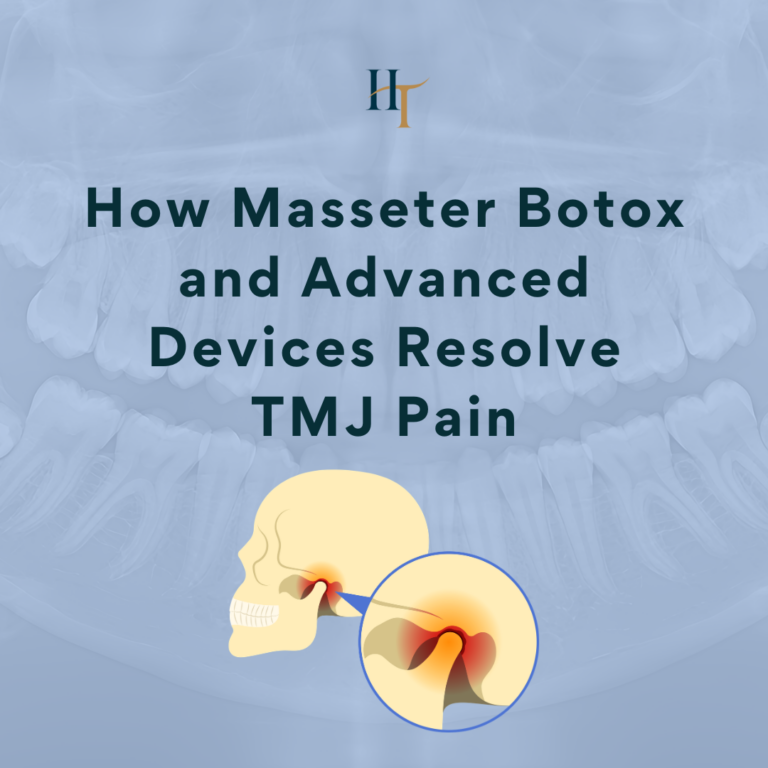
The primary muscle responsible for biting and chewing is the masseter muscle, which connects your lower jawbone to your cheekbone. Under chronic professional stress, this highly powerful muscle goes into a state of continuous, hyperactive contraction. Over time, it swells in size—a process known as masseter hypertrophy—and exerts immense, unnatural pressure on your temporomandibular joint (TMJ). This constant tension radiates outward, triggering severe facial pain, neck stiffness, and migraines.
Precision Therapeutic Decompression
While traditional night guards shield your teeth from wearing down, they do nothing to stop the underlying muscle from firing. This is where TMJ Botox offers a highly targeted, medical-grade intervention. By administering precise, localized injections directly into the overactive tissue, we can temporarily interrupt the chemical signals telling the muscle to clench.
[hronic Tech Stress] ──► Hyperactive Masseter Clenching ──► TMJ Pain & Severe Headaches
By safely reducing the workload of the masseter, the muscle finally relaxes, allowing the surrounding joint space to decompress.
Preserving Natural Performance
A common concern among professionals is whether choosing masseter Botox for TMJ will alter their appearance or impact their speech. Because the treatment strictly targets the deep structural fibers of the chewing muscle—leaving the superficial expressive muscles completely untouched—your natural smile remains entirely unaffected. You can speak smoothly on investor calls, present clearly during board meetings, and smile naturally, all while enjoying immediate, profound relief from localized jaw tension and debilitating myofascial headaches.
Sleep, Airway, and Jaw Alignment
Jaw clenching during sleep isn’t always caused by corporate stress alone; it is frequently your brain’s emergency survival mechanism trying to keep an obstructed airway open. When you enter deep sleep, the muscles in your throat relax. If your lower jaw slips backward at night, it can restrict your breathing passage. To prevent suffocation, the brain sends an emergency signal to your jaw muscles to clench aggressively, forcing the lower jaw forward to reopen the air passage. While this survival reflex keeps you breathing, it leaves your TMJ severely inflamed.
Engineering Nighttime Relief
To break this destructive cycle and restore deep, restorative REM sleep, we routinely fabricate a specialized, custom oral appliance known as a Mandibular Advancement Device (MAD device). Unlike bulky, generic boiling-and-biting guards, a clinical MAD is a precision-engineered piece of medical hardware.
Biomechanical Protection
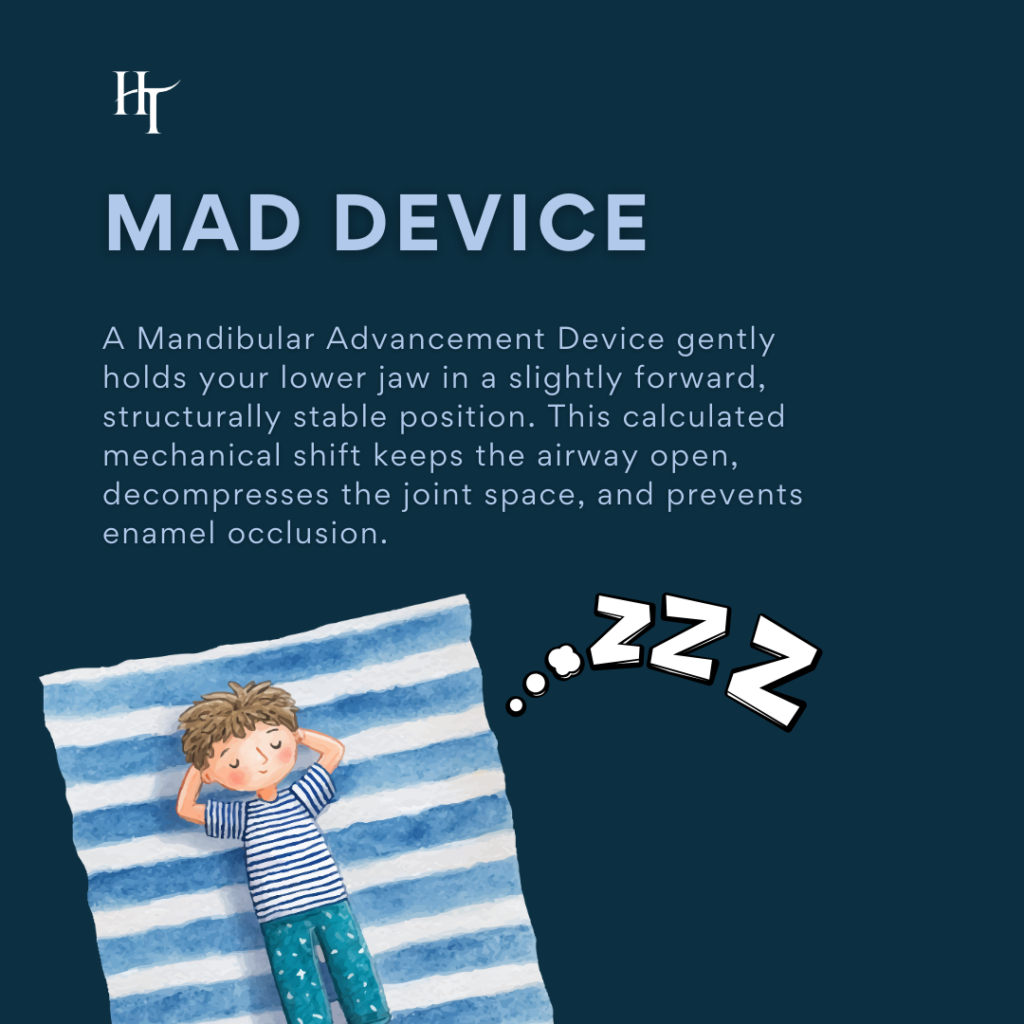
Worn comfortably while you sleep, a custom MAD device gently holds your lower jaw in a slightly forward, structurally stable position. This calculated mechanical shift achieves three critical health goals:
- Keeps the Airway Open: It prevents the tongue and soft palate from collapsing backward into the airway, eliminating snoring and micro-arousals so you can achieve deeper sleep cycles.
- Decompresses the Joint Space: By holding the jaw in an optimal orthopedic alignment, it reduces internal pressure on the sensitive TMJ disc, completely preventing morning soreness.
- Prevents Enamel Occlusion: It acts as a highly durable physical barrier, safely blocking your upper and lower teeth from making destructive contact.
The Threat of Structural Enamel Damage
Your jaw muscles are capable of exerting up to 250 pounds of force per square inch during subconscious nighttime grinding—far more pressure than is ever generated while eating. Over months of unmanaged Q3 stress, this repetitive, structural pounding creates microscopic flexes in your enamel, eventually leading to deep, permanent cracks in teeth.
The Progression of Damage
Left unaddressed, these micro-fractures operate exactly like a small stone chip in a car windshield. Under the continuous stress of chewing and clenching, the structural damage progresses through distinct, increasingly severe clinical stages:
- Micro-Fracture / Craze Line: At this initial stage, the damage causes minor temperature sensitivity and remains largely invisible to the naked eye. Clinical intervention involves early bond sealing and localized occlusal adjustments.
- Deep Structural Crack: As the fracture deepens, it triggers sharp pain when releasing a bite and persistent sensitivity to cold. This requires a custom protective crown to bind and shield the remaining tooth structure.
- Root-Level Fracture: In the final stage, the crack plunges into the living nerve tissue, causing severe, throbbing aches, internal nerve infections, or tooth splitting. This requires advanced root canal therapy or a complete extraction followed by a dental implant.
High-Magnification Diagnostic Triage
Catching these structural vulnerabilities early is paramount to avoiding invasive tooth loss. At our Waverley Street practice, we utilize high-magnification intraoral cameras, transillumination technology, and digital diagnostic tech to identify micro-cracks in teeth long before they are visible to the naked eye. This allows us to reinforce your enamel and protect your natural teeth before invasive, complex treatments become mandatory.
Neuromuscular Dental Q&A
While standard cosmetic results can appear within a few days, therapeutic relief from masseter Botox for TMJ typically begins to take notice around 7 to 10 days post-injection. The maximum structural relaxation and reduction in jaw soreness are usually achieved around week 3 or 4, as the overworked muscle naturally thins out, sheds its accumulated tension, and allows the temporomandibular joint to heal.
Modern, medical-grade Mandibular Advancement Devices are incredibly streamlined, low-profile appliances designed specifically to eliminate the bulkiness associated with old, generic over-the-counter mouthguards. Because each appliance is digitally milled from high-strength, biocompatible materials to match the exact contours of your unique bite, most patients adapt completely within just a few nights, waking up feeling significantly more rested and energized.
Reclaim Your Daily Comfort and Focus
The physical stress of a high-performance tech career shouldn’t dictate your daily comfort or threaten your long-term oral health. Utilizing targeted neuromuscular strategies like TMJ Botox to relax overactive muscles, paired with a custom MAD device to secure your airway and protect your bite, provides a comprehensive, state-of-the-art shield against chronic jaw tension, structural headaches, and dangerous cracks in teeth.
Do not let chronic jaw fatigue compromise your professional focus or quality of life this summer. Located in the heart of downtown Palo Alto at 416 Waverley Street (just a few blocks from the Stanford campus and University Avenue), Dr. Harry Tseng and his experienced associates provide elite, highly personalized neuromuscular and restorative care tailored to the demands of busy modern professionals.
Contact our office today to reserve your comprehensive TMJ and jaw pain evaluation!