
You’ve been ignoring that dull ache for weeks. Maybe months. Then one morning you bite into toast and something shifts. That’s usually when people call us.
Not every damaged tooth needs a tooth extraction. Sometimes root canal therapy or a dental crown can fix things. But there are clear signs a tooth is past the point of saving, and we see these cases in our Palo Alto office almost daily.
Here’s what to watch for:
It’s almost always the same story. Someone waited, hoped it would get better on its own, and by the time they come in the damage is too far along. That’s not a judgment. It’s just what we see.
We use digital x-rays to look at what’s happening beneath the surface. Sometimes a tooth looks fine from the outside but the root tells a different story. Patients from the Midtown neighborhood often come in thinking they need a simple filling, then the x-ray shows bone loss we can’t reverse.
So how do you know for sure? You don’t. That’s our job. But if you’re dealing with any combination of the signs above, don’t wait another week. A limited oral examination takes very little time and gives us everything we need to tell you whether your tooth can stay or needs to go.
Not every tooth extraction works the same way. The approach depends on what’s going on inside your mouth, and we figure that out before anything else happens.
A simple extraction is exactly what it sounds like. The tooth is visible above the gumline, it’s loose enough to grip, and we can remove it with standard instruments. Most of the time, you’re in and out faster than you’d expect. We see this a lot with teeth that have been loosened by gum disease or teeth that are too damaged by decay to save with a filling or dental crown.
Surgical extraction is different. This is what we do when a tooth hasn’t fully come through the gum, when it’s broken off at the gumline, or when the roots are curved in a way that makes a straight pull impossible. We may need to make a small incision in the gum tissue or remove a bit of bone around the tooth. Impacted wisdom teeth almost always fall into this category. About half the extractions we do here in Palo Alto end up being surgical to some degree.
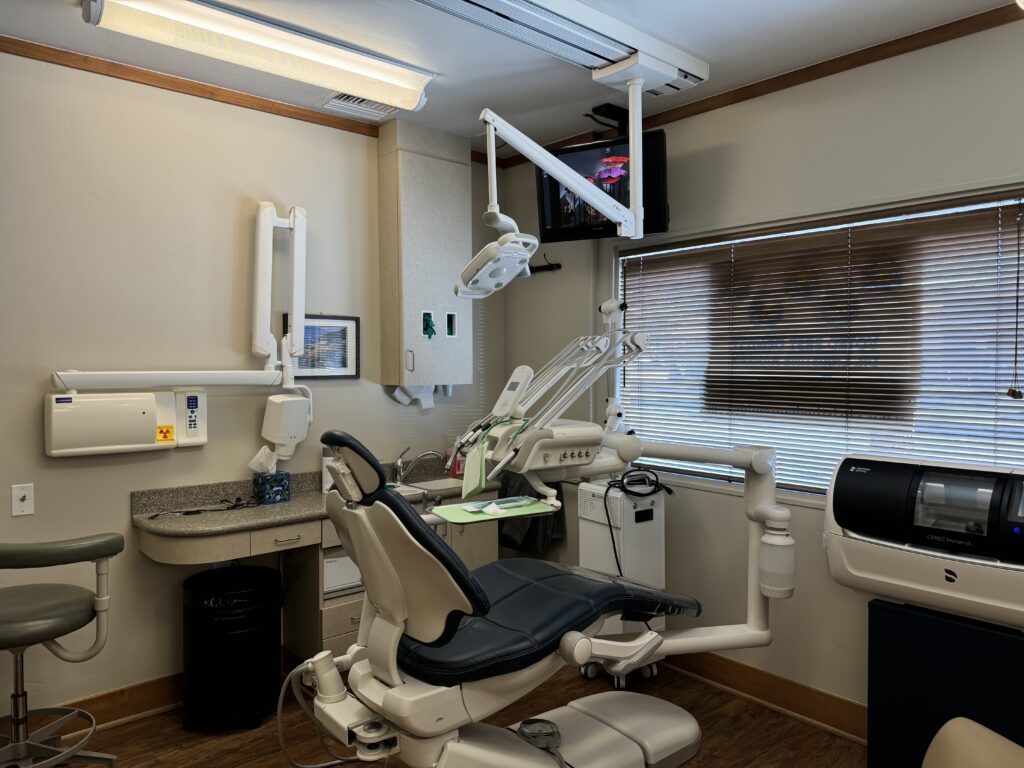
Digital x-rays tell us which type you need. We can see root shape, bone density, how close the tooth sits to your sinuses or nerves. That imaging drives every decision.
Here’s what determines the type of extraction you’ll need:
Recovery looks a little different for each type, too. Simple extractions usually heal within a few days. Surgical cases might need a week or so of careful attention, and we’ll walk you through all of that before you leave our office.
Patients near Midtown or Old Palo Alto often come in assuming they need surgery when it’s actually a simple case. And sometimes it’s the other way around. That’s why the exam matters so much. We don’t guess. We look, we plan, then we move forward with the right approach for your specific tooth.
You walk in. We talk first. That’s how every extraction starts at our Palo Alto office, and it’s the part most people don’t expect.
We’ll review your digital X-rays and show you exactly what’s going on. You’ll see the tooth, the root shape, and why it needs to come out. No guessing. We want you to understand the plan before we pick up a single instrument. If you have questions, this is the time, and we never rush through it.
Once you’re comfortable, here’s how the actual extraction goes:
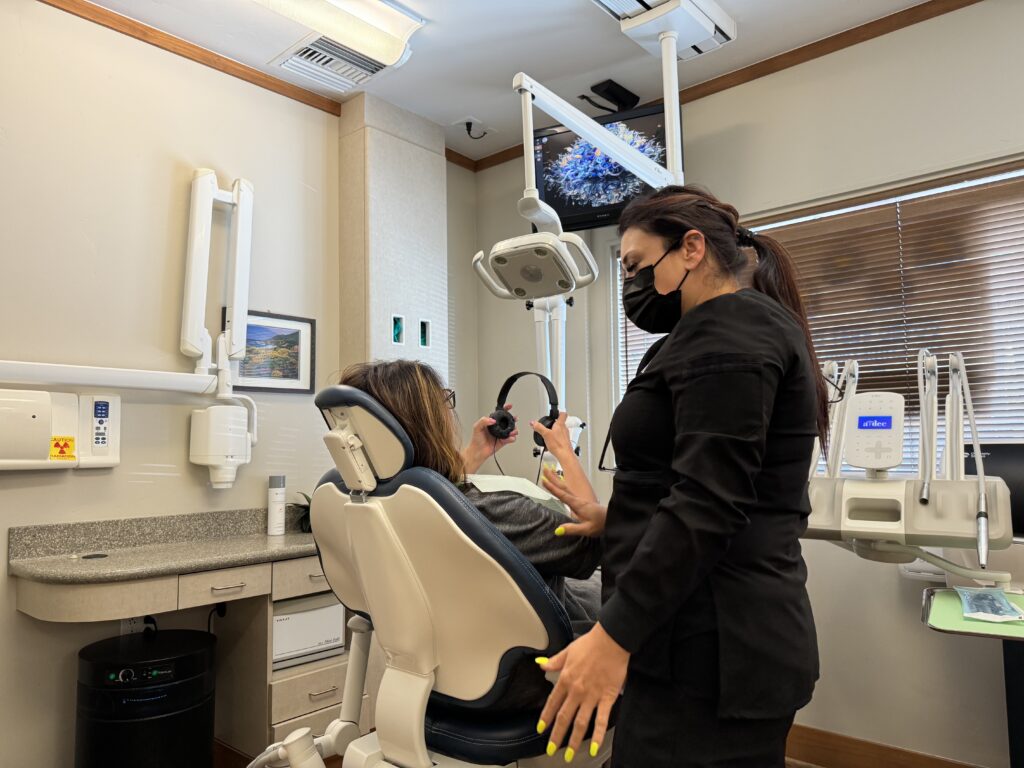
The whole thing often takes less than 30 minutes for a simple extraction. Most patients tell us it was way easier than they built it up to be.
Surgical extractions take a bit longer. Impacted wisdom teeth or teeth that broke below the gum line need more careful work. But the steps are the same: numb, loosen, remove, verify. We just spend more time on the loosening stage and sometimes place a stitch or two.
Something people near Midtown or College Terrace ask us a lot is whether they can drive home after. If you only had local numbing, yes. If you chose oral sedation, you’ll need a ride. Plan ahead.
You’re never alone in the chair wondering what’s happening next. We explain every step as we go. That’s not a policy we read somewhere. It’s just how we work.
Most of our Palo Alto patients work in tech. They sit at desks all day, they’re on calls, and they can’t afford to miss much. So the first question is always the same. “How fast can I get back to work?”
Faster than you think.
For a simple tooth extraction, here’s what the timeline actually looks like:
Surgical extractions take a bit longer. Add two or three extra days of real downtime. But even then, we see patients from the Midtown area back at their standing desks within a week.
Here’s what catches people off guard. It’s not the pain that slows you down, it’s the swelling. Ice packs in 20-minute intervals during the first 48 hours make a huge difference. Sleeping slightly propped up helps more than any extra medication.
We tell patients to schedule their extraction for a Thursday or Friday. That gives you the weekend to recover without burning through PTO. By Monday, most people feel close to normal.
One thing to avoid during recovery: straws. Sucking through a straw can dislodge the blood clot and cause a dry socket. That’s the one complication that actually sets your timeline back. Skip the smoothie straw for a few days. Just drink from the cup.
Your body does the heavy lifting during recovery. Our job is making sure you know exactly what to expect so you can plan around it. If you’ve got a big meeting or a deadline coming up, let us know when you book. We’ll help you pick the right day.
Here’s something most people don’t think about until after the tooth is already out. The bone that held your tooth starts to shrink almost right away. It’s called resorption. And if you’re planning on a dental implant down the road, that missing bone becomes a real problem.
Socket preservation is a simple step we can do right at the time of your extraction. We place a bone graft material into the empty socket, then cover it with a protective membrane. Your body does the rest over the next few months, building new bone where the old tooth used to be. We do this routinely for patients in Palo Alto who know they’ll want an implant later, and it saves them from needing a bigger bone grafting procedure down the line.
When Socket Preservation Makes Sense
Not every extraction needs it. But certain situations make it worth a serious conversation:
We talk through this with every patient before we start. Most people are glad we brought it up because nobody else had mentioned it to them before. Folks near Midtown and Crescent Park ask us about this a lot, especially when they’ve been told elsewhere that they “just need the tooth pulled” with no mention of what comes after.
The healing process for a preserved socket takes about three to four months. During that time, you’ll follow the same care instructions as a standard extraction. No extra pain. No extra visits in most cases.
So what’s your actual next step? If you’ve been putting off an extraction because you’re not sure what happens afterward, that’s exactly why we’re here. We’ll look at your digital x-rays, talk about whether socket preservation fits your situation, and map out a clear plan. One visit to our Palo Alto office gets you answers. Give us a call and let’s figure this out together.
Most simple extractions heal within three to four days. You can usually return to desk work the next day if you had local numbing only. Surgical cases, like impacted wisdom teeth, may need five to seven days of careful rest. We send you home with printed aftercare instructions so you know exactly what to expect each day. If you work in tech and sit at a desk all day, most patients are back on calls within 48 hours.
You will feel pressure during the procedure, but not pain. We numb the area completely before we do anything else. Most patients tell us they were surprised by how little they felt. If you feel anxious, we offer nitrous oxide and oral sedation to help you stay relaxed. We also explain every step as we go so nothing catches you off guard.
It depends on what type of sedation you chose. If you only had local numbing, you can drive yourself home without a problem. If you chose oral sedation, you will need someone to drive you. Plan this ahead of time before your appointment. Patients from College Terrace and Midtown ask us this a lot, and we always remind people to arrange a ride if sedation is part of the plan.
We use digital x-rays to look at the root and bone before making any decision. A tooth that looks bad on the outside sometimes still has healthy structure we can work with. But constant pain, a loose tooth, an abscess near the gumline, or a crack below the gumline are all signs a tooth may be past saving. A short exam gives us everything we need to answer that question clearly for you.
A simple extraction is used when the tooth is fully visible above the gumline and can be gripped and removed with standard tools. A surgical extraction is needed when the tooth is impacted, broken at the gumline, or has curved roots that make a straight pull impossible. About half the extractions we do in Palo Alto end up being surgical to some degree. Your x-rays tell us which approach is right before we start.
Call us right away. A bump or abscess near the base of a tooth usually means there is trapped infection. That infection can spread to your jaw if it is left alone. We see this regularly at our Palo Alto office, and it is one of the clearest signs a tooth needs to come out. Do not wait to see if it goes away on its own. A quick exam tells us exactly what is happening and what needs to be done.

If you spend much time around University Avenue or grab coffee at Town & Country Village, you see a lot of great smiles. But for many people in our neighborhood, showing their teeth in photos makes them feel shy. Maybe you have a chip from a bike ride at Shoreline Park or your teeth have just gotten yellow over the years from too many lattes. If you are looking for a dentist in Palo Alto, you want someone who can make you look like yourself, just better.
We see so many people from Crescent Park and Midtown who want to fix their smile but don’t want to look “fake.” Finding a dentist in Palo Alto who understands that local, natural look is a big deal. We treat our patients like friends we run into at the California Avenue Farmers’ Market. We want you to feel confident whether you are giving a big talk at Stanford or just meeting friends for dinner in Old Palo Alto.
Most people come to us because they want a Cosmetic Dentist they can trust. A lot of folks ask, “Who is the best cosmetic dentist near me?” The answer is usually someone who listens more than they talk. We don’t just push expensive treatments. We look at your whole face and figure out what will make you feel the most happy.
In a town like Palo Alto, people care about the details. Whether you work in tech or are raising a family in Barron Park, you want your dental work to last. We use the best materials because we want your smile to stand up to real life. Being a Cosmetic Dentist is about more than just white teeth; it’s about making everything line up and feel right when you bite down.
If you have gaps, deep stains, or crooked teeth that you want to fix all at once, Porcelain Veneers are usually the answer. Last year, a local professor came to us because he hated how his teeth looked on Zoom. We used veneers to give him a smile that looked totally real but way brighter.
Porcelain Veneers are very thin shells of ceramic that we bond to the front of your teeth. They are super strong and they don’t stain like regular teeth do. Because we custom-make them for your mouth, we can pick the exact shade and shape. This is a great way to get a “smile makeover” in just a couple of visits. We make sure they match your other teeth so nobody even knows you had work done.
Sometimes you don’t need a whole new smile; you just need to fix one or two small things. That is where Composite Bonding is perfect. If you have a small chip on a front tooth or a little gap that bugs you, we can fix it in one visit.
During Composite Bonding, we use a tooth-colored resin that is kind of like clay. We shape it right on your tooth and then harden it with a special light. It’s much cheaper than veneers and it looks great. A lot of students at Paly High come in for this after sports accidents. It’s a quick way to get your smile back to normal without a big dental bill.
Have you ever felt like your teeth look too short or that your smile is too “gummy?” This is actually really common. We use Gum Contouring to fix the shape of your gum line. We gently remove a little bit of the extra tissue to show off more of your teeth.
Gum Contouring makes a huge difference in how your face looks. It balances everything out. We use modern tools so it heals realy fast and doesn’t hurt much at all. Most people from the Green Gables neighborhood who get this done tell us they can’t believe they waited so long to do it. It’s a small change that makes your whole smile look way more professional and clean.
We know there are a lot of offices to choose from when you look for a dentist in Palo Alto. Here is some honest advice we give our friends:
We love being part of the Palo Alto community and seeing our patients out and about in College Terrace or at the Stanford Shopping Center. If you are ready to love your smile again, come talk to us. We don’t do high-pressure sales; we just want to help you look your best.