
Gum disease. That’s the short answer.
But what that really looks like, because most people don’t realize they have it. You might notice a little blood when you brush. Maybe your gums look puffy or darker than usual. Or maybe nothing at all. That’s the tricky part. Gum disease doesn’t always hurt, it just quietly gets worse.
Scaling and root planing treats the stage we call periodontal disease. It’s what happens when plaque and tartar creep below your gumline and start irritating the tissue around your teeth. Over time, small pockets form between your gums and tooth roots. Bacteria settle into those pockets. And once they’re in there, no amount of brushing at home can reach them.
Signs We See Most Often
Our patients in Palo Alto usually come in describing one or two of these:
We see this every week. Someone comes in for a periodic oral examination thinking they just need a regular cleaning. Then we measure their gum pockets and find readings of 4, 5, even 6 millimeters deep. Healthy gums sit at 1 to 3 millimeters. Anything beyond that tells us bacteria have moved in below the surface.
Here’s what most people don’t know. According to the CDC, nearly half of adults over 30 have some form of periodontal disease. So if you’re dealing with this, you’re not alone.
Left alone, those deep pockets lead to bone loss around your teeth. That’s when teeth get loose. That’s when extractions become part of the conversation. But scaling and root planing catches things before that point. It removes the buildup below the gumline and smooths the root surfaces so your gums can reattach properly.
Not sure if this is what you need? That’s actually pretty common. A lot of folks near Old Palo Alto come in just wanting answers. We start with a careful look and honest conversation before anything else.
You just heard you need scaling and root planing. Maybe you weren’t expecting it. That’s fair.
But here’s the thing. We don’t recommend this procedure on a hunch. There are real, measurable signs that tell us your gums need more than a regular cleaning. And we’ll walk you through every one before anything happens.
What We’re Actually Measuring
During your periodic oral examination, we use a small probe to measure the space between your gums and teeth. Healthy gums sit tight, usually one to three millimeters deep. When those pockets reach four millimeters or more, that’s where bacteria hide and a regular cleaning can’t reach. We see this constantly in our Palo Alto patients who’ve been consistent with brushing but still develop deeper pockets over time. It’s not a failure on your part, it’s just how gum disease works sometimes.

Beyond pocket depth, here’s what we look for:
Patients who need scaling and root planing usually show at least two or three of these signs together. One symptom alone doesn’t mean much. The full picture does.
Your X-Rays Tell the Story
Our digital x-rays show us what’s happening underneath. Bone that’s receded around a tooth root is a clear signal. We’ll pull those images up on screen right next to you so you can see exactly what we see. No guessing. Patients near Midtown often tell us they appreciate that transparency because a previous office just told them they “needed work” without explaining why.
And if your gums are actually healthy? We’ll tell you that too. We’d rather see you for a standard cleaning and send you home happy. But when the numbers and the images line up, scaling and root planing is the right call. According to the American Academy of Periodontology, learn about scaling and root planing and how early treatment of gum disease prevents the kind of damage that leads to tooth loss down the road.
You deserve to understand what’s going on in your own mouth before saying yes to anything.
We walk every patient through this before we start. No surprises.
Knowing what’s coming makes the whole thing easier. Most folks who visit our Palo Alto office feel calmer once they hear how straightforward scaling and root planing actually is. Here’s exactly what happens from the moment you sit down.
The whole process takes about 45 minutes to an hour per side. Patients tell us it was way less intense than they expected.
But here’s what matters most. You’re numb the entire time. If you’re someone who gets anxious in the chair, we also offer nitrous oxide and oral sedation. Plenty of our patients near Crescent Park have told us they nearly dozed off during the procedure. That’s the goal.
And once it’s done, your mouth is already starting to heal. The gums respond fast when bacteria aren’t constantly irritating them. You’ll likely notice less bleeding when you brush within the first week or two.
Want to know what the appointment feels like before you commit? Give us a call and we’ll answer every question you have.

Most of our Palo Alto patients walk out feeling totally fine. A little tenderness, maybe some mild soreness in the gums. That’s it.
The first 24 to 48 hours are when you’ll notice the most sensitivity. Cold water might sting a bit. Hot coffee could feel sharper than usual. But here’s the thing, this fades fast. Your gums just went through a deep cleaning they probably needed for a long time, so a little reaction is completely normal. We tell patients near Crescent Park and all across town the same thing: give it a few days before you judge how you feel.
What to Expect in the First Week
Your body does most of the healing work on its own. Gum tissue is incredibly good at bouncing back once the bacteria and buildup are gone. Here’s what you’ll likely notice:
All of this resolves within a week. We see it constantly. A patient comes in worried about sensitivity on day three, then calls us a week later saying everything feels great.
Warm salt water rinses help a lot. Just a half teaspoon of salt in a glass of warm water, swished gently a few times a day. It keeps the area clean and soothes irritated tissue. Stick with a soft-bristle toothbrush for at least the first week.
You don’t need to take time off work. You don’t need to change your diet dramatically. Just avoid really crunchy or spicy foods for a day or two.
One thing we always mention: your teeth might feel “different” after scaling and root planing. That’s because the tartar that was sitting along your gumline is gone now. Your tongue runs over surfaces it hasn’t touched in months, it can feel strange at first. But that smooth feeling? That’s actually what clean teeth are supposed to feel like.
If sensitivity lasts beyond two weeks or you notice anything unusual, give us a call. We’re happy to check in and make sure everything’s healing the way it should.
About four to six weeks after your scaling and root planing, we’ll bring you back in. This visit matters more than most people think.
We’re checking how your gums responded to treatment. Healthy tissue should look pink, feel firm, and sit snugly against your teeth again. We measure those pocket depths one more time. In most cases, we see real improvement. Pockets that were five or six millimeters deep often shrink back to three or four. That’s a big deal. And if certain spots haven’t bounced back the way we’d like, we catch it right then instead of months later.
Here’s what we look for at your re-evaluation:
Most patients in Palo Alto respond well after just one round. But gum disease doesn’t just disappear forever. It’s a condition you manage, not cure once and forget about.
That’s why we typically recommend periodontal maintenance visits every three to four months after treatment. These aren’t the same as a standard cleaning. They go deeper. We clean below the gumline in areas that are still healing, recheck pocket depths, and keep bacteria from regaining a foothold. According to the American Academy of Periodontology, patients who stick to this schedule have much better long-term outcomes than those who return to twice-yearly visits too soon.
So what does this look like in real life? You come in a few extra times per year. Each visit is quick. And over time, your gums stabilize.
We’ve had patients near Midtown who were nervous about needing ongoing care, thinking it meant something was wrong. It’s actually the opposite. Maintenance means the treatment worked, you’re just protecting the results now. Think of it like changing the oil in your car more often after a major repair. Our team keeps a close eye on everything so you don’t end up back at square one. If you ever need a periodic oral examination between maintenance visits, we handle that too.
Staying consistent is the whole game here.
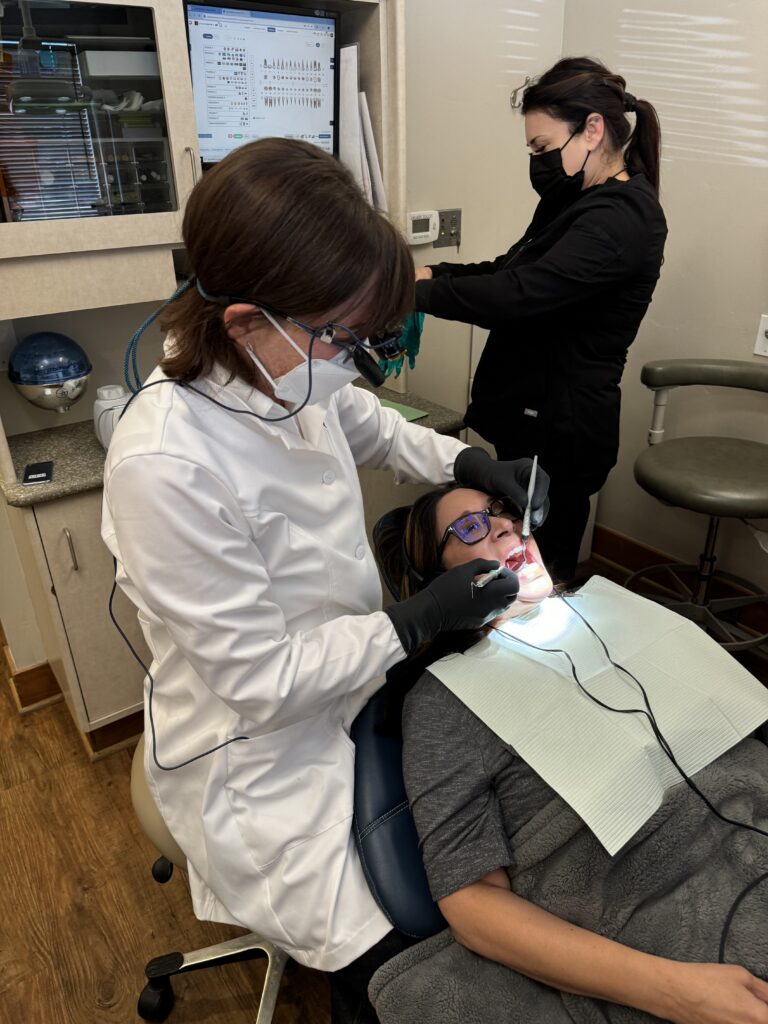
Your gums usually start looking and feeling better within two to four weeks after the procedure. Swelling goes down, bleeding during brushing decreases, and gum tissue begins to tighten back up around your teeth. At your follow-up visit, we re-measure those pocket depths to see how much they’ve improved. Most Palo Alto patients see pocket depths shrink by one to two millimeters. That’s a real, measurable sign your gums are healing the way they should.
No — you’re fully numb during the procedure, so you won’t feel pain while it’s happening. Afterward, some soreness and mild sensitivity for a day or two is normal. Most patients say it was much easier than they expected. If you feel anxious in the dental chair, we offer nitrous oxide and oral sedation at our Palo Alto office. You’re in control of how comfortable you want to be the whole time.
A regular cleaning removes plaque and tartar above and just at the gumline. Scaling and root planing goes deeper — it cleans bacteria and buildup from pockets that can be four, five, or even six millimeters below your gumline. A standard cleaning simply can’t reach that far. We also smooth the root surfaces so bacteria have less to grab onto going forward. It’s a different level of care for a different level of problem.
That’s a fair question, and we hear it often. The recommendation is based on specific, measurable findings — not a guess. Pocket depths of four millimeters or more, bleeding when probed, visible tartar on your x-rays, and bone loss around roots are the real signals. We pull up your digital x-rays right on screen so you can see exactly what we see. Patients near Midtown have told us they appreciated that kind of transparency after other offices weren’t clear about the “why.”
Most patients don’t need to repeat the full procedure if they stay consistent with follow-up care. After healing, we typically move you to periodontal maintenance visits every three to four months instead of the standard six-month schedule. Those more frequent visits keep bacteria from rebuilding in your pockets. Palo Alto patients who stick to that schedule usually maintain their results well long-term. Skipping those follow-ups is the most common reason gum disease comes back.
Stick to soft foods for the first day or two — think yogurt, eggs, mashed potatoes, and soup. Avoid anything crunchy, hard, or very hot right after the appointment since your gums will be tender. Skip alcohol and smoking during the healing period, as both slow down tissue recovery. We go over all of this with you before you leave the office so you’re not guessing at home. Most people are back to normal eating within a few days.

If you spend much time around University Avenue or grab coffee at Town & Country Village, you see a lot of great smiles. But for many people in our neighborhood, showing their teeth in photos makes them feel shy. Maybe you have a chip from a bike ride at Shoreline Park or your teeth have just gotten yellow over the years from too many lattes. If you are looking for a dentist in Palo Alto, you want someone who can make you look like yourself, just better.
We see so many people from Crescent Park and Midtown who want to fix their smile but don’t want to look “fake.” Finding a dentist in Palo Alto who understands that local, natural look is a big deal. We treat our patients like friends we run into at the California Avenue Farmers’ Market. We want you to feel confident whether you are giving a big talk at Stanford or just meeting friends for dinner in Old Palo Alto.
Most people come to us because they want a Cosmetic Dentist they can trust. A lot of folks ask, “Who is the best cosmetic dentist near me?” The answer is usually someone who listens more than they talk. We don’t just push expensive treatments. We look at your whole face and figure out what will make you feel the most happy.
In a town like Palo Alto, people care about the details. Whether you work in tech or are raising a family in Barron Park, you want your dental work to last. We use the best materials because we want your smile to stand up to real life. Being a Cosmetic Dentist is about more than just white teeth; it’s about making everything line up and feel right when you bite down.
If you have gaps, deep stains, or crooked teeth that you want to fix all at once, Porcelain Veneers are usually the answer. Last year, a local professor came to us because he hated how his teeth looked on Zoom. We used veneers to give him a smile that looked totally real but way brighter.
Porcelain Veneers are very thin shells of ceramic that we bond to the front of your teeth. They are super strong and they don’t stain like regular teeth do. Because we custom-make them for your mouth, we can pick the exact shade and shape. This is a great way to get a “smile makeover” in just a couple of visits. We make sure they match your other teeth so nobody even knows you had work done.
Sometimes you don’t need a whole new smile; you just need to fix one or two small things. That is where Composite Bonding is perfect. If you have a small chip on a front tooth or a little gap that bugs you, we can fix it in one visit.
During Composite Bonding, we use a tooth-colored resin that is kind of like clay. We shape it right on your tooth and then harden it with a special light. It’s much cheaper than veneers and it looks great. A lot of students at Paly High come in for this after sports accidents. It’s a quick way to get your smile back to normal without a big dental bill.
Have you ever felt like your teeth look too short or that your smile is too “gummy?” This is actually really common. We use Gum Contouring to fix the shape of your gum line. We gently remove a little bit of the extra tissue to show off more of your teeth.
Gum Contouring makes a huge difference in how your face looks. It balances everything out. We use modern tools so it heals realy fast and doesn’t hurt much at all. Most people from the Green Gables neighborhood who get this done tell us they can’t believe they waited so long to do it. It’s a small change that makes your whole smile look way more professional and clean.
We know there are a lot of offices to choose from when you look for a dentist in Palo Alto. Here is some honest advice we give our friends:
We love being part of the Palo Alto community and seeing our patients out and about in College Terrace or at the Stanford Shopping Center. If you are ready to love your smile again, come talk to us. We don’t do high-pressure sales; we just want to help you look your best.