
Sedation Dentistry Palo Alto
Offering a range of sedation dentistry options to work with you to best manage your fear.
Signs You May Benefit from Dental Sedation
You already know something’s off. Maybe you’ve canceled two appointments this year. Maybe you sat in a parking lot near University Avenue and couldn’t make yourself walk inside. That feeling in your chest isn’t weakness. It’s your body doing what it’s learned to do around dental work.
We see this every week in Palo Alto.
The signs aren’t always dramatic. Sometimes it’s subtle stuff that builds over time. You might not even connect the dots until someone lays it out for you. Here’s what we hear most often from people who end up choosing sedation dentistry:
- You avoid calling the dentist even when you’re in pain
- The sound of a drill or suction makes your hands grip the armrest hard
- You have a strong gag reflex that makes even cleanings tough
- Past dental experiences left you shaken, maybe even as a kid
- You need a lot of work done but can’t sit through long appointments
Any one of those is enough. You don’t need to check every box. Some folks come to us with none of those classic signs. They just want to feel calm. That’s a perfectly good reason too.
There’s another group we help often. People with conditions like TMJ disorder or chronic neck pain can’t hold their jaw open for 45 minutes without real discomfort. Sedation dentistry takes the edge off that physical strain, not just the anxiety. According to the American Dental Association, nearly 30 percent of adults avoid dental visits due to fear or anxiety. That number tracks with what we see at our practice.
Here’s a scenario that comes up a lot. Someone in the Crescent Park area calls us because they haven’t been to a dentist in five or six years. They know they need work. They’re embarrassed about the gap. But the thought of sitting in that chair makes their stomach turn. Nine times out of ten it’s the same thing, a bad experience years ago that never got addressed.
You don’t have to power through it. That old advice about “just being brave” doesn’t help when your nervous system is running the show. Sedation gives your body permission to relax so we can do our job well.
Not sure if what you’re feeling counts? It counts. If dental visits feel harder for you than they should, that’s the sign.
Types of Sedation Options Available at Our Office
Not every patient needs the same level of help to relax. That’s something we talk through with every person who walks into our Palo Alto office feeling nervous. Some folks just need the edge taken off. Others want to be completely unaware the appointment is even happening.
We offer three main levels of sedation dentistry, and the right one depends on your anxiety level, the procedure itself, and your medical history.
- Nitrous oxide (laughing gas): This is the lightest option. You breathe it in through a small mask, feel calm within minutes, and it wears off fast. You can drive yourself home after. Great for cleanings or shorter procedures when you just need to stop gripping the armrest.
- Oral sedation: You take a prescribed pill about an hour before your visit. By the time you sit down in the chair, you’re deeply relaxed. You’ll stay awake but probably won’t remember much. This is our most popular choice for patients near Crescent Park who’ve been putting off bigger work for years.
- IV sedation: This goes directly into your bloodstream, so we can adjust the level throughout your procedure. You’ll drift into a twilight state. You’re technically conscious but feel like you slept through the whole thing. We use this for longer treatments or patients with severe dental fear.
Nine times out of ten, oral sedation is what our patients end up choosing. It’s simple, it works, and it doesn’t require needles to get started.
Here’s what matters most. Every option we provide is monitored carefully. Our team tracks your heart rate, oxygen levels, and breathing the entire time. According to the American Dental Association, sedation dentistry has an excellent safety record when administered by trained professionals. We don’t take that lightly.
So how do we decide which one fits you? We ask questions. Lots of them. About past experiences, medications you take, how long you’ve been avoiding the dentist. A patient who hasn’t had a cleaning in eight years because the sound of the drill makes them panic needs a different approach than someone who just gets a little jittery.
We figure that out together before anything happens.
Wondering which option might work for your situation? Give us a call and we’ll walk you through it. No pressure, just a conversation.
How to Prepare for Your Sedation Appointment
We give every patient a prep sheet before their visit. Most of the steps are simple things you probably already know.
The biggest one? Don’t eat or drink for a set number of hours before your appointment. For most sedation dentistry procedures, that means nothing after midnight the night before. Your stomach needs to be empty. This isn’t optional. It’s a safety requirement that protects your airway while you’re sedated. We’ve had patients drive all the way from the Crescent Park area only to reschedule because they forgot and had coffee that morning. It happens, but it’s avoidable.

What to Do the Day Before
A little planning goes a long way. Here’s what we tell our Palo Alto patients to handle the night before their appointment:
- Confirm your fasting window with our office. Different sedation levels have different rules.
- Arrange your ride home. You won’t be able to drive yourself. No exceptions.
- Set out loose, comfortable clothes. Skip anything with a tight collar or long sleeves that are hard to roll up.
- Take any approved medications with a tiny sip of water if our team has cleared it.
- Get a full night of sleep. Your body responds better to sedation when you’re rested.
That ride home part trips people up more than anything else. You’ll need someone who can sit in our waiting area or come back when we call. Rideshares work fine too.
Morning-Of Details
Wear short sleeves or something easy to push up. We’ll need access to your arm if we’re placing an IV line. Leave jewelry and watches at home. Skip the perfume or cologne since our team works close to your face for a while.
Bring your ID, your insurance card, and any paperwork we’ve sent you. That’s it.
Nine times out of ten, patients who follow these steps walk in calm and ready. The ones who don’t prepare tend to feel more anxious in the chair. Not because anything is wrong, just because uncertainty creates stress. We see this pattern constantly at our practice near downtown Palo Alto.
If you take daily medications for blood pressure, diabetes, or anxiety, call us ahead of time. Some meds need to continue on schedule. Others need to pause. Our licensed team reviews your full medical history before we decide, so there’s no guessing involved on your end.
One more thing. Clear your afternoon. Even with lighter sedation options, you’ll feel groggy for a few hours after. Plan on resting at home. No work calls, no errands, no picking up kids from school. Your body did something big and it deserves the downtime.
Recovery and What to Expect After Sedation
Most people walk out of our office surprised. They expected to feel groggy for the rest of the day, maybe even the next morning. Recovery from sedation dentistry is usually faster and easier than you’d think.
The first hour matters most. You’ll sit with us in a quiet recovery area until you’re steady on your feet. We check your vitals, make sure you’re responding well, and ask you a few simple questions. Nine times out of ten, patients feel clear-headed within 30 to 45 minutes after we stop the sedation. Nitrous oxide wears off almost immediately. Oral sedation takes a bit longer. IV sedation sits somewhere in between for most folks.
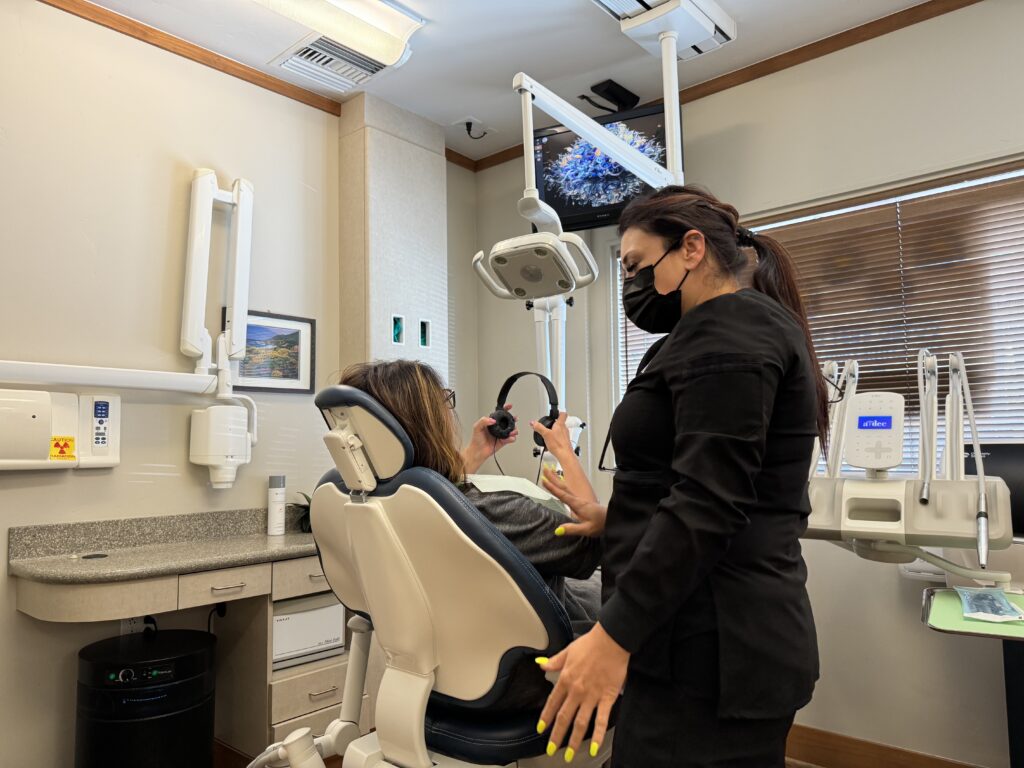
Sedation Dentistry Palo Alto
Offering a range of sedation dentistry options to work with you to best manage your fear.
Each of us has unique feelings and concerns about our dental health. Some of our patients get nervous even thinking about going to the dentist or avoid going altogether. Dental phobia is much more common than you might expect. It is for these patients that we offer a variety of solutions that will eliminate any anxiety. Imagine showing up at our offices, taking a pill and waking up with all of your dental work complete. It is a wonderful service and one that we are extremely proud to provide for our family of patients.
Sedation Dentistry is the process by which a patient is sedated and still conscious throughout the dental procedure; however, they are in a relaxed state and often do not remember the procedure at all. Only qualified dentists can perform Sedation Dentistry, they must have the comprehensive training to ensure the complete safety of the patient.
In addition to relaxing the patient, Sedation Dentistry allows for dental work that would have ordinarily taken multiple visits to be completed with only one visit. This allows for the patient to avoid missing extra work or school and helps to ease their fears about having to repeat an unpleasant experience again and again.
CONSCIOUS SEDATION
Conscious sedation is what terms such as “relaxation,” or “comfortable” dentistry are referring to. Conscious sedation can be achieved with nitrous oxide (best for patients with minimal anxiety or fear), or—for a deeper sedative result—with oral sedation such as valium (best for patients exhibiting mild fear, a mild gag reflex or for simpler/quicker procedures). Both of these conscious sedation options have been developed to relax patients who might otherwise experience heightened sensitivity as their pain or anxiety thresholds are aggravated by chemicals our bodies release in response to fear. Each conscious sedation option can be used alone, or may be combined to customize your depth and duration of sedationNitrous Oxide (inhalation sedation): Used for over 100 years, it is an excellent analgesic administered via a nasal hood, and easily fine-tuned by the dentist. All bodily functions remain essentially normal, and effects wear off quickly.
Oral Conscious Sedation: The patient administers this him/herself, usually about an hour before treatment. After consulting with us, we will determine the most appropriate oral sedation medication and dosage based upon your health history and necessary duration of action. An added bonus of this option is that it has an amnesic that often leaves a patient with little or no memory after treatment.
DENTAL PHOBIA
Although Palo Alto Dentist Dr. Hansen strives to make every patient feel comfortable and safe in our care, we realize that fears of the dentist are a very real concern affecting a good portion of the population to some degree, and an estimated 10-15% of the population to a greater degree. This latter group of patients has what is known as dental phobia, and it often prevents them from seeking regular treatment to the detriment of their oral, and therefore overall, health. Patients with dental phobia might consistently make and break dental appointments (a fearful “fleeing instinct”), or they become no-shows because their fear of the dentist causes avoidance. At our Palo Alto Dental Practice, we do not want any patient to suffer with infections, broken teeth, or generally poor smile appeal because they cannot overcome dental phobia. We want to treat you before a tooth gets infected or broken, or your gums require intense periodontal work. Dental phobias and stress can be so severe and operate on such a subconscious level that they can lead to “dental fear dreams,” or panic attacks that are marked by classic symptoms of increased breathing and heart rates and sweating. This is why we offer a range of sedation dentistry options. We can work with you to best manage your fear.Here’s what you should plan for on the day of your appointment:
- Arrange a ride home. You can’t drive yourself after oral or IV sedation. Have someone from your household or a friend in Palo Alto ready to pick you up.
- Keep your schedule clear for the rest of the day. No work meetings, no errands along University Avenue, no cooking dinner.
- Eat something light once you get home. Soup, toast, scrambled eggs. Your stomach will appreciate it.
- Drink plenty of water. Sedation can leave your mouth dry, and hydration helps everything bounce back quicker.
- Skip alcohol and heavy meals for at least 24 hours.
We see this every week. Someone comes in terrified, gets through their procedure comfortably, then calls the next morning saying they feel completely normal. That’s the typical experience.
Some patients notice mild drowsiness that evening. A few feel slightly nauseous, though that’s rare with the medications we use now. You might not remember much about the procedure itself. That’s actually by design. The sedation creates a kind of memory gap around the appointment, so the anxiety doesn’t stick with you afterward.
And here’s something people don’t expect. Many of our patients near Crescent Park tell us they slept better that night than they had in weeks. The relief of finally getting dental work done without the stress changes something.
By the next morning, you’re back to normal. No lingering effects, no “hangover” feeling. Kids bounce back even faster than adults do. According to the American Dental Association, modern sedation protocols have an excellent safety profile with minimal recovery time for healthy patients.
One thing we always tell people. Don’t judge how you feel in the first 20 minutes after waking up. That initial fogginess fades fast. Give yourself grace. Let the medication clear your system, and you’ll feel like yourself again before you know it.
Frequently Asked Questions:
What should I bring to my sedation dentistry appointment in Palo Alto?
Bring a valid ID, your insurance card, and a list of any medications you currently take. Wear loose, comfortable clothes with easy sleeve access. Most importantly, bring the person who will drive you home — you cannot drive after sedation, no exceptions. If you take regular medications, call us ahead of time so we can tell you which ones are safe to take that morning with a small sip of water.
How will I feel after my sedation dentistry procedure?
Most patients feel groggy for a few hours after their appointment. You will need someone to take you home and stay with you for the rest of the day. By the next morning, most people feel completely back to normal. Nitrous oxide clears your system the fastest — you may even feel fine to drive home after that option. Oral sedation and IV sedation take longer to wear off, so plan to rest that afternoon.
Is parking easy to find near your Palo Alto office?
Parking in Palo Alto can be tricky depending on the time of day, especially near busier areas like University Avenue. We recommend arriving 10 to 15 minutes early so you are not rushed. Street parking and nearby garages are usually available. If someone is dropping you off for a sedation appointment, they can circle back or wait nearby. Just call us if you are running late — we would rather know than have you stressed before you even sit down.
How do I know which type of sedation is right for me?
We figure that out together during a conversation before anything is scheduled. We ask about your anxiety level, your medical history, and how long you have been avoiding dental care. Someone who sat in a parking lot near University Avenue and could not walk inside needs a different approach than someone who just gets a little nervous. There is no wrong answer. Most of our patients end up choosing oral sedation because it is simple and does not require a needle to get started.
Is sedation dentistry safe for adults who have avoided the dentist for years?
Yes, sedation dentistry is safe and has a strong safety record when handled by trained professionals. We monitor your heart rate, oxygen levels, and breathing throughout the entire procedure. Many of our Palo Alto patients have not seen a dentist in five or more years before coming to us — that gap does not disqualify you. We review your full medical history and current medications before choosing the right sedation level for you.
Can sedation dentistry help if my issue is physical, not just anxiety?
Absolutely. Sedation dentistry helps with more than fear. If you have TMJ disorder, chronic neck pain, or a strong gag reflex, holding your jaw open for a long procedure can be genuinely painful. Sedation takes the physical edge off, not just the emotional stress. Many patients in Palo Alto come to us for this exact reason. You do not need to have a phobia to benefit — physical discomfort during dental work is a completely valid reason to ask about sedation options.